


Specialty Coffee vs Regular Coffee: A Complete Guide
Specialty coffee and regular coffee differ in quality, flavor, and production methods. Specialty coffee scores 80+ on a 100-point scale, emphasizing traceability, hand-picking, and small-batch roasting to highlight unique flavors like floral or citrus notes. Regular coffee prioritizes mass production, affordability, and consistency, often sacrificing flavor complexity.
Key Differences:
- Quality: Specialty coffee undergoes strict grading; regular coffee allows more defects.
- Sourcing: Specialty beans are traceable to specific farms; regular coffee lacks detailed origin info.
- Flavor: Specialty offers nuanced profiles; regular coffee has a flat, smoky taste.
- Roasting: Specialty uses precise small-batch roasting; regular coffee relies on high-volume, darker roasts.
- Cost: Specialty coffee costs more due to labor-intensive processes; regular coffee is budget-friendly.
Quick Comparison:
| Feature | Specialty Coffee | Regular Coffee |
|---|---|---|
| Quality | Scores 80+; minimal defects | Scores below 80; more defects |
| Sourcing | Traceable to farms/lots | Limited traceability |
| Flavor | Complex (e.g., floral, citrus) | Flat, bitter, smoky |
| Roasting | Small-batch, precise control | Large-batch, darker roasts |
| Cost | Higher price ($3–$6+/lb) | Lower price (~$1.80/lb) |
Your choice depends on priorities: specialty coffee for refined flavors and ethical practices or regular coffee for affordability and convenience.
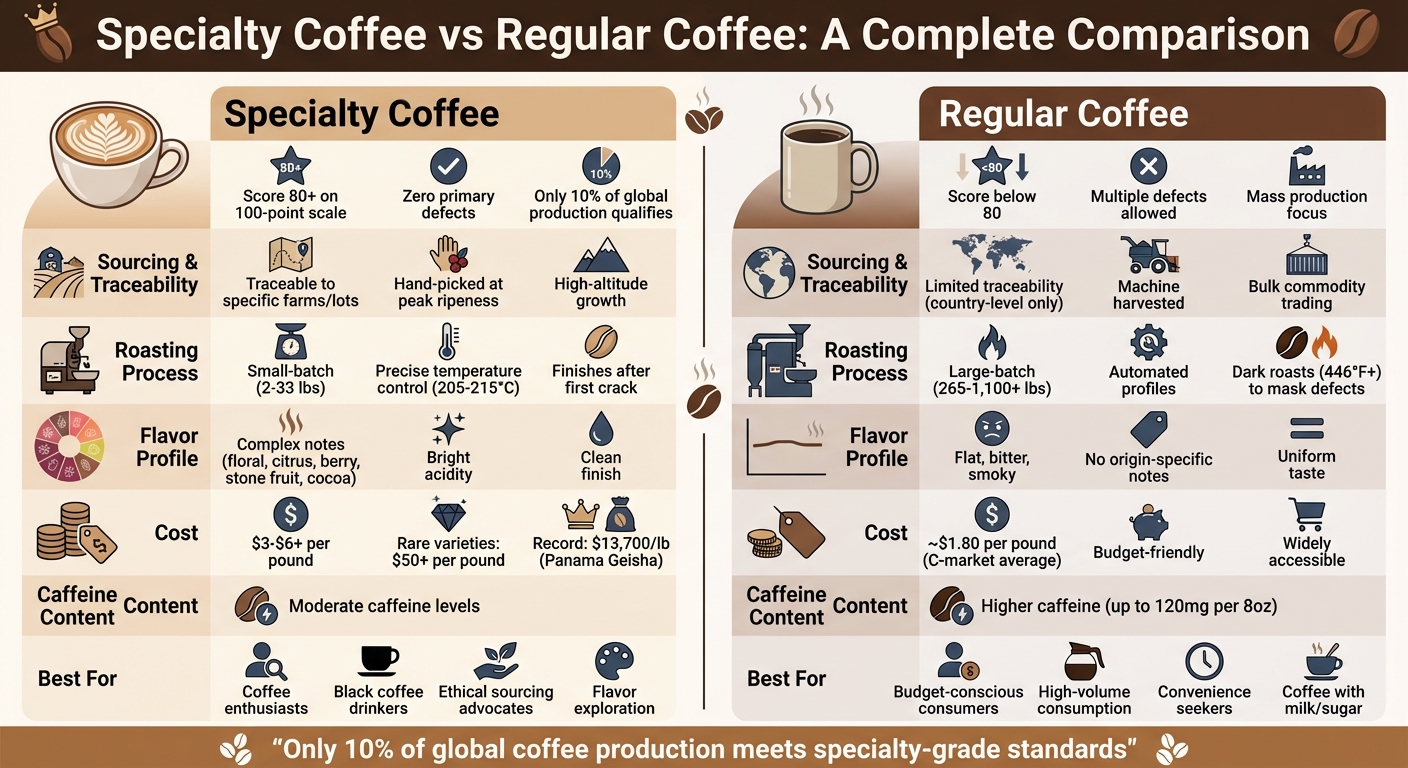
Specialty Coffee vs Regular Coffee: Complete Comparison Chart
1. Specialty Coffee
Quality
Specialty coffee earns its title through a strict evaluation process. To qualify, coffee beans must score at least 80 points on a 100-point scale during a standardized cupping process conducted by certified Q Graders. The Specialty Coffee Association divides these scores into categories: 90–100 is "Outstanding", 85–89.99 is "Excellent", and 80–84.99 is "Very Good."
Physical defects also play a big role. Specialty-grade beans must have zero primary defects and no more than five secondary defects per 350 grams of milled coffee. Globally, only about 10% of all coffee produced meets these demanding standards. Additionally, the updated Coffee Value Assessment (CVA) evaluates beans using four dimensions: physical quality, sensory attributes, consumer preference, and external factors like origin and farming practices.
Beyond these rigorous quality measures, the sourcing of specialty coffee sets it apart.
Sourcing
Specialty coffee stands out for its traceability. Unlike regular blends that often combine beans from multiple regions with little transparency, specialty coffee can usually be traced back to a specific farm, lot, or estate. The journey to quality begins at the source. These beans are typically grown at high altitudes, where cooler temperatures slow the maturation of coffee cherries. This slower growth allows complex sugars and acids to develop, enhancing flavor. Farmers also hand-pick only the ripest cherries to ensure consistency and optimal taste - a sharp contrast to the machine harvesting often used for regular coffee.
Roasting Techniques
The roasting process for specialty coffee is just as precise as its sourcing. Roasters use small-batch machines (handling 2–33 pounds or 1–15 kilograms) to maintain meticulous control over variables like temperature, airflow, and timing. Each batch follows a detailed roast profile, fine-tuned to highlight the unique characteristics of the beans. Most specialty coffee is roasted to finish shortly after the first crack, which occurs at temperatures between 205–215°C (401–419°F). To ensure consistency, many roasters use software like Cropster or Artisan to log data and replicate successful roasts.
"Roasting does not create quality - it reveals or destroys what already exists in the green bean." - SpecialityCoffee.ca
Flavor Profiles
Specialty coffee is celebrated for its intricate flavors, which often reflect the beans' origin. Common tasting notes include floral, citrus, berry, stone fruit, and cocoa. The processing method also plays a role in shaping the flavor. Washed (wet-processed) coffees often have bright acidity and clean, crisp flavors, while natural (dry-processed) coffees tend to deliver fruity, wine-like notes. Careful processing and roasting protect these delicate flavors, avoiding overly bitter or smoky profiles.
To fully enjoy these distinctive flavors, proper brewing is essential.
Brewing Methods
Brewing specialty coffee requires precision to bring out its best qualities. Use filtered water heated to about 200°F (93°C) and follow a coffee-to-water ratio of 1:15 to 1:17. A burr grinder is crucial - grind the beans fresh just before brewing to preserve their aromatic compounds. For the best results, use beans that have been roasted within two to six weeks and look for packaging that includes clear harvest and tasting details.
Cost and Accessibility
Specialty coffee often comes with a higher price tag, reflecting the care and effort involved in its production. Rare varieties, such as Gesha (Geisha), can cost over $50 per pound for green, unroasted beans. In August 2025, a lot of Panama Geisha beans set a record, selling for $13,700 per pound (around $30,204 per kilogram). These prices account for factors like labor-intensive hand-picking, lower yields from high-altitude farms, and specialized shipping methods. For coffee enthusiasts, the superior flavor and transparent sourcing often make the premium cost worthwhile.
sbb-itb-c3999cb
What’s the Difference Between Specialty Coffee vs Grocery Store Coffee
2. Regular Coffee
When it comes to regular coffee, the focus shifts from artistry to efficiency. It's all about delivering consistent, large-scale production. Here's a closer look at its quality, sourcing, roasting methods, flavor, and affordability.
Quality
Regular coffee, also known as commodity or commercial coffee, scores below 80 points on the Specialty Coffee Association's 100-point scale. Unlike specialty coffee, which demands beans free from primary defects, regular coffee allows for imperfections like black, sour, or insect-damaged beans. The emphasis here is on producing high volumes and maintaining a steady supply rather than chasing exceptional flavor or unique origin traits. Coffee that falls short of specialty standards often ends up in supermarket blends, instant coffee, or products labeled as "gourmet" or "premium".
"A score below 80? That's not a specialty. Period. There's no gray area, no 'almost specialty' badge for effort." – Ebru Coffee Co.
Sourcing
While specialty coffee prides itself on traceable origins, regular coffee is a different story. These beans are bulk-harvested, often by machines, from multiple regions. Traceability is limited, typically stopping at the country level, and large-scale industrial farming - often reliant on heavy chemical use - dominates the production process. Regular coffee is traded as a raw commodity on the C-market, where pricing is dictated by global supply and demand rather than bean quality. For example, in mid-2024, the average price for green commodity coffee on the C-market was about $1.80 per pound.
Roasting Techniques
The roasting process for regular coffee prioritizes efficiency over precision. Large-scale commercial roasters handle batches ranging from 265 to over 1,100 pounds, using automated preset profiles to maximize throughput. To mask the flaws in lower-grade beans, roasters often push the beans into the "second crack" stage, reaching temperatures of 446°F or higher. This approach sacrifices the delicate aromatics and unique characteristics of the beans, resulting in a smoky flavor. Additionally, many commercial machines recirculate hot exhaust, further deepening the smoky profile.
"Commercial roasters want coffee to taste the same whether it comes from Brazil or Vietnam." – Ebru Coffee Co.
Flavor Profiles
The flavor of regular coffee is often flat, bitter, or smoky, lacking the complexity found in specialty coffee. Origin-specific notes like citrus or floral tones are absent, replaced by a dominant "roast flavor" that overshadows any unique characteristics. The diminished acidity contributes to its uniform taste. Moreover, darker roasted beans, being more porous, can lead to over-extraction during brewing, resulting in a harsh, bitter cup.
Cost and Accessibility
One of the biggest draws of regular coffee is its affordability and availability. It’s the go-to option in grocery stores, offices, vending machines, and fast-food chains. Its lower price point makes it accessible to a wide audience, offering a basic caffeine fix without the higher cost of specialty-grade coffee, which can be two to four times more expensive.
Pros and Cons
Now that we've covered the detailed differences between specialty and regular coffee, here's a side-by-side comparison to highlight the key distinctions. This breakdown focuses on quality, sourcing, roasting, and flavor differences to help you make an informed choice.
| Feature | Specialty Coffee | Regular Coffee |
|---|---|---|
| Advantages | • Offers complex flavors like fruity, floral, or nutty notes • Traceable to specific farms or lots • Contains higher antioxidant levels • Ethically sourced to ensure fair compensation for farmers • Hand-picked at peak ripeness • Roasted in small batches to emphasize origin-specific characteristics |
• Much lower cost • Readily available in stores and restaurants • Provides a consistent, predictable taste • Easy to prepare with basic equipment • Higher caffeine content (up to 120 mg per 8oz) • Long shelf life |
| Disadvantages | • Higher price range (usually $3–$6+ per pound) • Requires precise brewing techniques (water temperature of 194–205°F and a 1:16 coffee-to-water ratio) • Needs additional equipment like grinders, scales, and brewers • Limited availability - only about 10% of global coffee production qualifies • Flavor varies between harvests • Best enjoyed within 2–4 weeks of roasting |
• Tends to have a flat, bitter, or smoky flavor • Lacks distinct notes tied to its origin • Limited traceability beyond the country of origin • Higher likelihood of defects in beans • Farmers often receive lower compensation • Frequently over-roasted to hide imperfections |
Both types cater to different priorities. Whether you value affordability and convenience or exceptional flavor and ethical sourcing depends on your personal preferences.
How to Identify and Choose Specialty Coffee
To determine if a coffee qualifies as specialty, check for a Specialty Coffee Association (SCA) score of 80 or higher on a 100-point scale. This score evaluates factors like aroma, flavor, acidity, and body under controlled conditions. Additionally, specialty coffee must have no more than five defects per 12 ounces of milled beans, ensuring a clean and high-quality product. Once you've confirmed the score, inspect the packaging for clear sourcing details.
Transparent labeling is another crucial factor. Look for packaging that specifies the farm name, the altitude where the coffee was grown, the processing method (e.g., Washed, Natural, or Honey), and the coffee variety. For instance, Ethiopian beans grown at high altitudes often offer fruity, floral flavors, while Colombian beans from the Andean mountains are known for their citrus and chocolate notes. These flavor profiles are shaped by the unique micro-climates where the beans are cultivated.
Once you've found clearly labeled coffee, follow these practical tips for buying and storing it. Choose freshly roasted whole beans with a roast date within the last two to four weeks, and store them in an airtight container in a cool, dark place. At home, use a burr grinder to achieve consistent particle size, and aim for a coffee-to-water ratio of 1:15 to 1:17, measured with a digital scale. When brewing, use filtered water heated to 195°F–205°F to avoid scorching the grounds.
Certifications like Fair Trade, Organic, and Rainforest Alliance indicate ethical sourcing and responsible farming practices, but they don't guarantee specialty-grade quality. Specialty coffee is ultimately defined by taste - how clean, balanced, and consistent the cup is when evaluated under precise conditions. A coffee can carry these certifications and still fall short of the 80-point threshold, meaning it doesn’t meet specialty standards.
Specialty coffee is widely available from local roasters and online retailers, often at a premium due to labor-intensive processes like hand-picking and small-batch roasting. While rare varieties like Gesha can cost over $50 per pound for unroasted beans, many specialty options are more affordable. By using these tips, you can confidently choose specialty coffee that elevates your daily brew.
Conclusion
Specialty coffee brings intricate flavors and ethical sourcing to the table, while regular coffee emphasizes affordability and convenience. If you value nuanced tastes and sustainable practices, specialty coffee delivers an artisanal experience. On the other hand, regular coffee offers a reliable and accessible caffeine fix.
Specialty coffee earns a score of 80 or above on a 100-point scale, featuring complex flavor notes - like floral or caramel - and full traceability to specific farms. Regular coffee, though simpler in taste, provides a budget-friendly option and consistent energy boost, though it often lacks the clarity and balance specialty beans provide.
Your choice ultimately depends on how you enjoy your coffee. If you drink it black and appreciate the distinct regional flavors, specialty coffee is a worthwhile indulgence. Its production involves hand-picking, small-batch roasting, and careful shipping to ensure the preservation of unique profiles. However, if you prefer adding milk and sugar or rely on large quantities of coffee throughout the day, regular coffee is a practical option - since these additives tend to mask the subtle qualities of specialty beans.
For those on a budget but curious about specialty coffee, start small. Explore entry-level options from local roasters, and prioritize freshness by selecting beans roasted within the past two to four weeks. Pair this with proper brewing techniques to unlock their full potential.
"Specialty coffee is simple, really. It's well-handled, consistent, and clean coffee. But to make coffee specialty is very, very complicated." - Carly Getz, Green Coffee Specialist and Lab Manager, Blue Bottle Coffee
FAQs
Is specialty coffee always lighter roasted than regular coffee?
Specialty coffee isn’t always roasted lighter than regular coffee. While light roasts are commonly linked with showcasing the beans' natural flavors, specialty coffee can be roasted to light, medium, or even dark levels. What sets it apart isn’t the roast level - it’s the quality behind it: careful sourcing, unique flavor profiles, and skilled craftsmanship. The choice of roast depends entirely on the producer’s vision and the specific flavors they want to bring forward.
Does specialty coffee have more caffeine than regular coffee?
Specialty coffee isn’t automatically stronger in caffeine compared to regular coffee. The amount of caffeine in your cup is influenced more by factors like the brewing method and the type of coffee bean used. For instance, Arabica beans, often found in specialty coffee, naturally have less caffeine than Robusta beans.
The roast level also comes into play. While lighter roasts might retain slightly more caffeine than darker roasts, the difference is fairly small and unlikely to be noticeable. Ultimately, specialty coffee is all about quality, flavor, and ethical sourcing - not an extra caffeine punch.
What’s the easiest way to start brewing specialty coffee at home?
To begin brewing specialty coffee at home, start with freshly roasted, high-quality beans that score 80 points or higher on the specialty grade scale. These beans are the foundation of great coffee. Pair them with a burr grinder, which ensures a consistent grind size and brings out the best flavors in your cup.
For brewing, consider using a straightforward method like a pour-over or an AeroPress. Both are easy for beginners to master and produce excellent results. To maximize flavor, grind your beans right before brewing - it makes a noticeable difference!