


Artisanal vs. Commercial Roasting: Which Fits Your Values?
When choosing between artisanal and commercial coffee roasting, it boils down to what matters most to you: flavor, ethics, or convenience. Artisanal roasting focuses on small batches, hands-on techniques, and highlighting unique bean flavors. It often supports fair wages for farmers and eco-conscious practices. Commercial roasting, on the other hand, prioritizes efficiency, affordability, and consistency, often using large-scale automation. Here's the quick breakdown:
- Artisanal Roasting: Small batches (5–50 lbs), light-to-medium roasts, complex flavors, traceable sourcing, $12–$18 per pound.
- Commercial Roasting: Large batches (500+ lbs), darker roasts, uniform flavor, anonymous sourcing, budget-friendly prices.
Quick Comparison:
| Feature | Artisanal Roasting | Commercial Roasting |
|---|---|---|
| Batch Size | 5–50 lbs | 500–6,000+ lbs |
| Flavor | Fruity, floral, nuanced | Bitter, smoky, uniform |
| Price | $12–$18 per pound | Cheaper ($8–$10 per pound) |
| Sourcing | Traceable, fair wages | Anonymous, commodity beans |
| Roast Level | Light to medium | Darker, masks defects |
| Availability | Specialty shops, online | Grocery stores, chains |
Your coffee choice reflects your priorities - whether it's supporting ethical farming, savoring diverse flavors, or sticking to budget-friendly options.
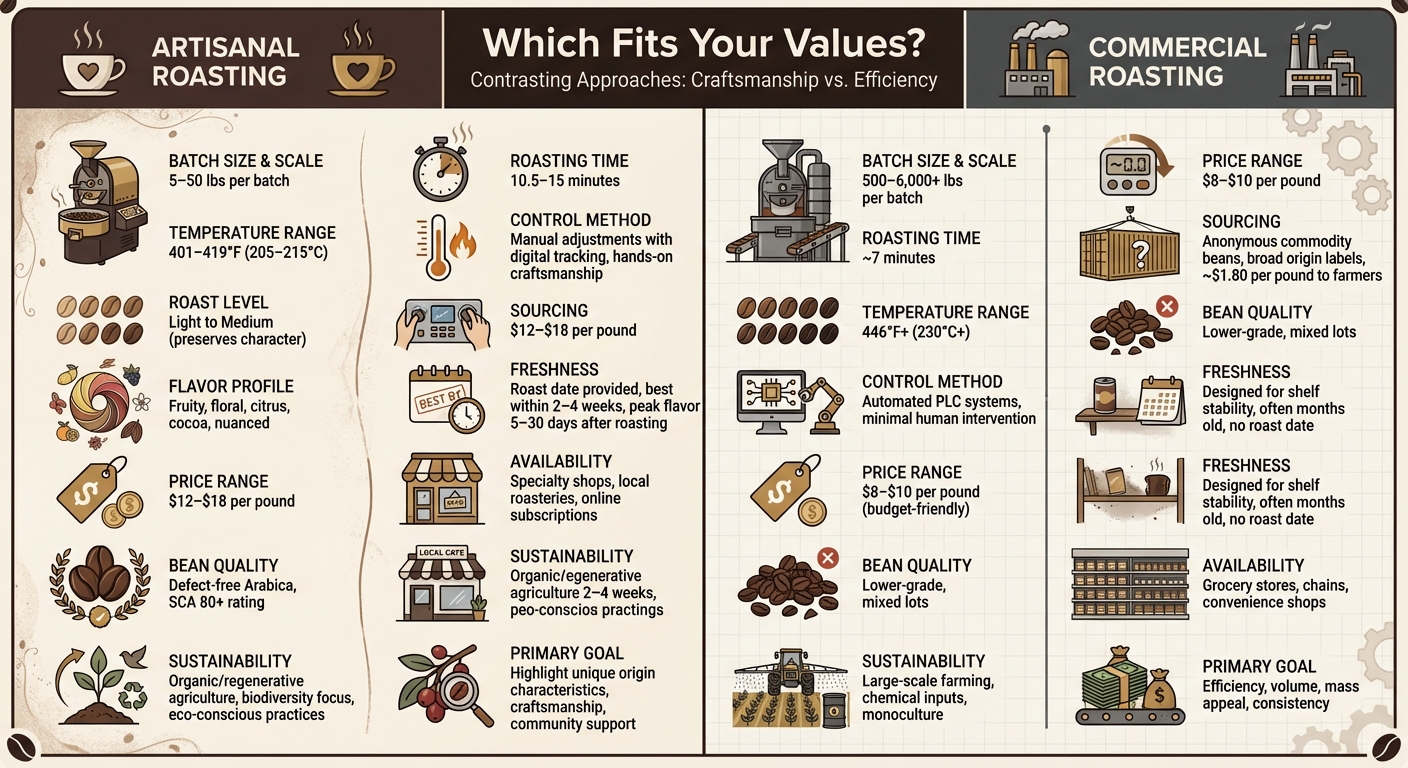
Artisanal vs Commercial Coffee Roasting: Complete Comparison Guide
Production Scale and Philosophy
Small Batches vs. Mass Production
The size of a roasting batch is a defining factor between artisanal and commercial coffee roasting. Artisanal roasters typically handle smaller quantities, working with batches of 5 to 50 pounds of coffee at a time. On the other hand, commercial roasters manage much larger volumes, often exceeding 500 pounds per batch. This difference in scale has a big impact on how much control the roaster has over the process.
Smaller batches allow roasters to make quick adjustments to heat and airflow, which helps preserve the subtle flavors of the beans. In contrast, larger batches are more resistant to temperature changes due to thermal inertia, making it harder to fine-tune the roast. As Achilles Coffee Roasters explains:
Large-scale roasting is built around the priorities of efficiency, throughput, predictability, and volume. Its goal is to move massive quantities of coffee through machines as quickly and uniformly as possible while minimizing risk.
Artisanal roasters approach each small batch as a chance to highlight the unique characteristics of the beans. Meanwhile, commercial roasters prioritize consistency and rely on scale and automation to achieve it. These differences in scale and philosophy directly influence the roasting techniques used, as explored in the next section.
Hands-On Craftsmanship vs. Automation
Artisanal roasting is all about hands-on involvement. Roasters rely on their senses - sight, smell, and sound - to bring out the best in each batch. They listen for the "first crack", a key moment when the beans expand and release moisture, and adjust the process in real time based on what they observe. Ebru Coffee Co. captures this approach perfectly:
Roasting isn't just numbers, it's smell, sound, and intuition. Machines can't smell tipping or hear when the first crack has a lazy pop. Humans can.
In contrast, commercial roasting leans heavily on automation. Using tools like Programmable Logic Controllers (PLCs), these systems follow pre-set parameters to ensure consistent results across large batches. While automation is excellent for repeatability, it lacks the flexibility to adapt to variables like bean density or moisture content, often sacrificing subtle nuances for uniformity.
sbb-itb-c3999cb
The Roasting Process: Techniques and Differences
Roasting Times and Temperature Management
Roasting times differ significantly between artisanal and commercial methods. Artisanal roasting typically takes 10.5 to 15 minutes, while commercial processes are much faster, completing in around 7 minutes.
Temperature control is another major distinction. Artisanal roasters manually adjust bean temperature, airflow, and rate-of-rise to create distinct flavor profiles. They often stop roasting just after the first crack, at temperatures ranging from 401°F to 419°F (205–215°C), preserving the sugars, acids, and aromatics that define specialty coffee. On the other hand, commercial roasting relies on automated systems with preset parameters, often pushing beans to 446°F or higher (230°C+), which results in a darker and more uniform roast.
The drying phase also highlights this contrast. Artisanal roasters spend 4 to 8 minutes at roughly 300°F, using gradual heat to avoid scorching. Conversely, commercial roasters prioritize speed, starting at higher temperatures. As Silk Road Coffee Co. explains:
By adjusting the temperature at specific intervals, specialty roasters can control the development of acidity, sweetness, and body.
These differences in timing and temperature require equipment tailored for either manual precision or automated efficiency, as explored next.
Equipment and Process Control
The equipment used in roasting plays a crucial role in shaping the process. Artisanal roasters typically use smaller machines, handling 1 to 15 kg (about 2 to 33 pounds) per batch. These machines allow for hands-on adjustments to airflow, drum speed, and heat transfer. Many also feature double-walled drums to maintain thermal stability while preventing beans from scorching. To enhance precision, artisanal roasters often incorporate digital tools like high-resolution manometers and software such as Cropster or Artisan to monitor temperature curves in real-time.
In contrast, commercial roasters operate on a much larger scale, using machines capable of processing 120 to 500 kg (265 to 1,100 pounds) or more per batch. These systems rely on Programmable Logic Controllers (PLCs) to execute pre-programmed roast profiles, requiring minimal human involvement. Diego Vidiz, a technical consultant at IMF Roasters, explains:
In an artisanal roastery, you rely heavily on direct experience and visual cues, but at a larger industrial level, you need precise, reliable systems to help replicate each roast profile consistently.
The emphasis differs between the two approaches. Artisanal setups focus on drawing out unique flavor nuances, while commercial systems prioritize consistency and efficiency. Even the technology reflects these priorities. For example, modern commercial roasters like the Loring system can reduce energy use by up to 80% compared to traditional designs. However, some of these systems recirculate hot exhaust gas, which can introduce a smokier or "dirtier" flavor compared to the cleaner heat application in artisanal roasting.
Comparison Table: Artisanal vs. Commercial Roasting Techniques
| Feature | Artisanal Roasting | Commercial Roasting |
|---|---|---|
| Roasting Time | 10.5–15 minutes | ~7 minutes |
| Equipment Capacity | Small-scale (1–15 kg) | Large-scale (120–500+ kg) |
| Temperature Range | 401–419°F (205–215°C) | 446°F+ (230°C+) |
| Control Method | Manual adjustments with digital tracking | Automated PLC systems |
| Equipment Focus | Flavor development and nuance | Uniformity and repeatability |
| Heat Application | Direct flame or infrared | High-velocity hot air or recirculation |
| Key Variables | Airflow, drum speed, manual adjustments | Pre-programmed profiles |
Difference Between Commercial Coffee Roasters vs Artisanal Coffee Roasters
Flavor and Quality: What to Expect from Each Approach
The differences in roasting methods naturally lead to distinct flavor profiles, with each style offering its own unique experience.
Complexity and Nuance in Artisanal Roasting
Artisanal roasting is all about precision and attention to detail. By working with small batches - typically between 5 and 50 pounds - roasters can tweak temperature and airflow in real time, preserving the delicate aromatics that make specialty coffee shine. These roasters often stop the roast earlier to retain the subtle flavors that showcase the bean's origin, resulting in cups filled with layers of citrus, stone fruit, floral, and cocoa notes.
Artisanal roasters also take the time to "cup" (taste-test) each batch, fine-tuning flavor profiles to account for seasonal variations in the beans. Interestingly, coffee roasted this way often reaches its peak flavor between 5 and 30 days after roasting. As Achilles Coffee Roasters puts it:
Small batches don't just roast coffee. They reveal it.
– Achilles Coffee Roasters
In contrast, commercial roasting focuses on consistency rather than highlighting individual bean characteristics.
Consistency and Uniformity in Commercial Roasting
While artisanal methods highlight complexity, commercial roasting prioritizes uniformity and predictability. Large-scale facilities handle batches ranging from 500 pounds to over 6,000 pounds, which makes it difficult to adjust heat during the roast. This results in a more uniform but less intricate flavor profile.
To ensure consistency across such large volumes, commercial roasters often take beans to the "second crack" stage at around 230°C (446°F). This darker roast level can mask imperfections in lower-quality beans, creating a consistent taste regardless of the beans' origin. Ebru Coffee Co. explains the difference clearly:
Commercial roasters want coffee to taste the same whether it comes from Brazil or Vietnam. Specialty coffee roasters want to highlight origin flavors.
– Ebru Coffee Co.
The downside? Commercially roasted coffee often lacks the nuanced fruit or floral notes found in artisanal roasts, leaning instead toward bitter, ashy, or smoky flavors. Additionally, these beans are often designed for long shelf life, meaning they may sit for months before being consumed.
Comparison Table: Artisanal vs. Commercial Flavor Profiles
| Feature | Artisanal Roasting | Commercial Roasting |
|---|---|---|
| Flavor Notes | Fruity, floral, citrus, cocoa | Bitter, smoky, uniform, bland |
| Batch Size | 5–50 lbs | 500–6,000+ lbs |
| Roast Level | Light to Medium (preserves character) | Dark (masks defects) |
| Bean Quality | Defect-free Arabica (SCA 80+) | Lower-grade, mixed lots |
| Freshness | Roast date provided; best within 2–4 weeks | Designed for shelf stability; often months-old |
| Goal | Highlight unique origin characteristics | Efficiency, volume, mass appeal |
These differences highlight the importance of choosing a roast that matches your preferences - whether you're drawn to the artistry of small-batch roasting or the practicality and uniformity of large-scale production.
Practical Considerations: Cost, Accessibility, and Sustainability
When choosing your coffee, it's not just about flavor - factors like cost, availability, and environmental impact play a big role too.
Cost Differences: Premium vs. Budget-Friendly Options
Artisanal coffee often costs between $12 and $18 per pound, while commercial coffee is significantly cheaper. This price gap comes down to how the coffee is made. Artisanal roasters take extra steps, like hand-picking coffee cherries at their ripest - sometimes revisiting the same trees multiple times - and tasting every batch to ensure top-notch quality. On the other hand, commercial producers rely on machine harvesting and automated checks, focusing on catching major defects rather than fine-tuning flavor. As Ebru Coffee Co. puts it:
Commodity coffee externalizes these costs. That's why it can sell so cheaply - it simply doesn't pay for what it takes to produce sustainable coffee.
These differences in production methods affect not just the price but also where and how you can buy your coffee.
Accessibility and Distribution
Cheaper commercial coffee is easy to find - it’s stocked in grocery stores, convenience shops, and even fast-food chains. Artisanal coffee, however, usually requires a bit more effort to track down. You’ll find it in specialty coffee shops, local roasteries, or through online platforms that often offer roast-to-order or subscription services. These services prioritize freshness, shipping coffee just days after roasting. In contrast, commercial coffee is designed to last, often sitting in warehouses or on store shelves for months, with no clear roast date listed.
The Role of Sustainability in Roasting Choices
Artisanal roasters often emphasize eco-friendly practices, forming direct partnerships with farmers and supporting farming methods like organic or regenerative agriculture. These approaches help preserve biodiversity and improve soil health. They also trace their beans back to specific farms or cooperatives, ensuring their claims about ethics and the environment hold up. Meanwhile, commercial producers, focused on keeping costs low, depend on large-scale farming that uses chemical inputs and monoculture techniques, which can harm soil quality over time.
Which Fits Your Values? Choosing Based on Your Priorities
When it comes to deciding between artisanal and commercial roasting, it’s about more than just taste - it’s about aligning your coffee with your values. By understanding the differences, you can make a choice that resonates with your priorities.
Craftsmanship and Uniqueness vs. Consistency and Convenience
Artisanal roasting is all about attention to detail and a hands-on approach, while commercial roasting focuses on efficiency and consistency. If you enjoy products with a personal touch and unique character, artisanal coffee delivers flavors that reflect the specific regions and harvests they come from. These small-batch roasters rely on sensory skills to perfect each roast. On the other hand, commercial roasters handle massive batches - sometimes over 500 pounds - and aim for uniformity. Darker roasts often dominate here, masking imperfections to ensure every cup tastes the same.
Artisanal coffee also offers transparency, often tracing beans back to individual farms. In contrast, commercial blends typically use broad origin labels like "Colombia" or "Brazil", leaving out the details. This distinction highlights how different roasting methods align with your values and their impact on farming communities.
Supporting Communities and Purpose-Driven Businesses
Opting for artisanal coffee can make a difference for farming communities. Commodity coffee often sells for around $1.80 per pound, which isn’t enough to sustain farmers. Specialty roasters, however, pay between $3.00 and $6.00 or more per pound, ensuring fair wages and fostering long-term community support. This approach not only improves the quality of the coffee but also promotes social and economic equity.
Take Brown Boot Coffee, for example. Their business model turns your coffee purchase into a meaningful contribution. Each bag you buy supports nonprofit organizations without added costs to you. Their offerings, like Budaka Bold and Mayuge Morning at $25.00, help fund community missions while providing top-tier coffee. This stands in contrast to the commodity coffee system, emphasizing accountability and shared purpose.
By choosing artisanal roasters, you’re not just buying coffee - you’re supporting ethical practices and purpose-driven businesses that uplift farming communities.
Aligning Your Coffee Choices with Your Faith and Values
For those guided by faith, coffee can be more than a beverage - it becomes a way to live out stewardship. Artisanal roasters often see their work as a responsibility, infusing each bag with a story and a commitment to community.
Brown Boot Coffee exemplifies this with its Christian values and mission-driven business. Their blends come with personal stories, like Clyde's Roast ($23.00), inspired by the owner’s youngest son, or Bootstrap Blend ($20.00), a signature hazelnut roast. Choosing roasters that emphasize transparency, fair wages, and sustainable practices, such as shade-grown or organic methods, supports a system that respects both people and the planet.
As Freda Yuan from Origin Specialty Roastery puts it:
By working directly with the farmers, we can create a supply chain that is not only sustainable, but develop a relationship that can enhance the quality of the coffee produced.
Every cup of coffee becomes a meaningful act - one that uplifts communities, protects the environment, and reflects care and intention in every sip.
Conclusion
Deciding between artisanal and commercial roasting comes down to what you value most in your coffee experience. If you’re drawn to craftsmanship, diverse flavor profiles, and ethical sourcing, artisanal roasting might be your match. These roasters often produce beans with an 80+ rating from the Specialty Coffee Association, highlighting distinct, origin-specific flavors. Plus, their small-batch approach ensures each roast brings out the unique character of the beans. On the flip side, if convenience, affordability, and consistent flavor are your top priorities, commercial roasting provides a reliable, widely available option.
Your choice also reflects a broader commitment to values like community and sustainability. Artisanal roasters often emphasize quality and transparency, steering away from the commodity-focused model. For instance, choosing a purpose-driven roaster like Brown Boot Coffee means more than enjoying blends like Bootstrap Blend ($20.00) or Budaka Bold ($25.00). It’s about supporting nonprofit initiatives and uplifting communities with every purchase. These efforts not only elevate coffee quality but also contribute to meaningful, lasting change.
FAQs
How can I tell if a coffee is truly ethically sourced?
To find coffee that is genuinely sourced with ethical practices, focus on a few key factors. Look for transparency in the supply chain, ensuring you can trace where the coffee comes from. Check that farmers are receiving fair compensation for their work, which helps support their livelihoods. Also, pay attention to whether the coffee is produced using sustainable land management methods that protect the environment.
Certifications like Fair Trade or Rainforest Alliance can serve as reliable indicators of ethical practices. However, it’s also worth digging into the company’s values and commitments to make sure they align with these principles. Truly ethical sourcing benefits farmers, safeguards the planet, and prioritizes honest, traceable practices.
What roast level should I choose for the flavor notes I want?
When picking a roast level, think about the flavors you enjoy most. Light roasts bring out bright, fruity tones and showcase the natural characteristics of the coffee beans. If you prefer a balanced taste with a touch of sweetness and a smoother body, medium roasts are a great choice. For those who love bold, smoky flavors, dark roasts deliver a more robust experience, though they often overshadow the bean’s original notes.
Light roasts are perfect if you’re curious about the unique flavors tied to a coffee's origin. On the other hand, medium and dark roasts lean more into the richness of the roasting process itself.
How fresh should coffee be when I buy it?
For the best taste and aroma, aim to buy coffee as close to its roast date as you can. Freshly roasted beans hit their peak flavor within 1 to 4 weeks after roasting. As time passes, chemical changes cause the flavor to fade. Always check the roast date on the packaging to make sure you're getting the freshest beans - this is especially important if you're into artisanal coffee, where quality and flavor are top priorities.