


5 Ways Faith Shapes Purpose-Driven Coffee Brands
Your coffee can do more than fuel your morning - it can reflect your beliefs. Faith-driven coffee brands integrate Christian principles into every aspect of their work, from ethical sourcing to community impact. Here’s how they make a difference:
- Biblical Stewardship: They prioritize fair compensation for farmers and eco-friendly practices as acts of stewardship.
- Supporting Nonprofits: A portion of profits funds missions, schools, and clean water projects.
- Building Community: Relationships with farmers, employees, and customers are rooted in shared faith.
- Transparency: Clear labeling and direct trade practices ensure accountability.
- Faith-Inspired Products: Coffee blends with Scripture-inspired names and devotionals encourage reflection.
These brands, like Brown Boot Coffee, combine quality coffee with values-driven missions, turning every cup into an opportunity to support ethical practices and meaningful causes.
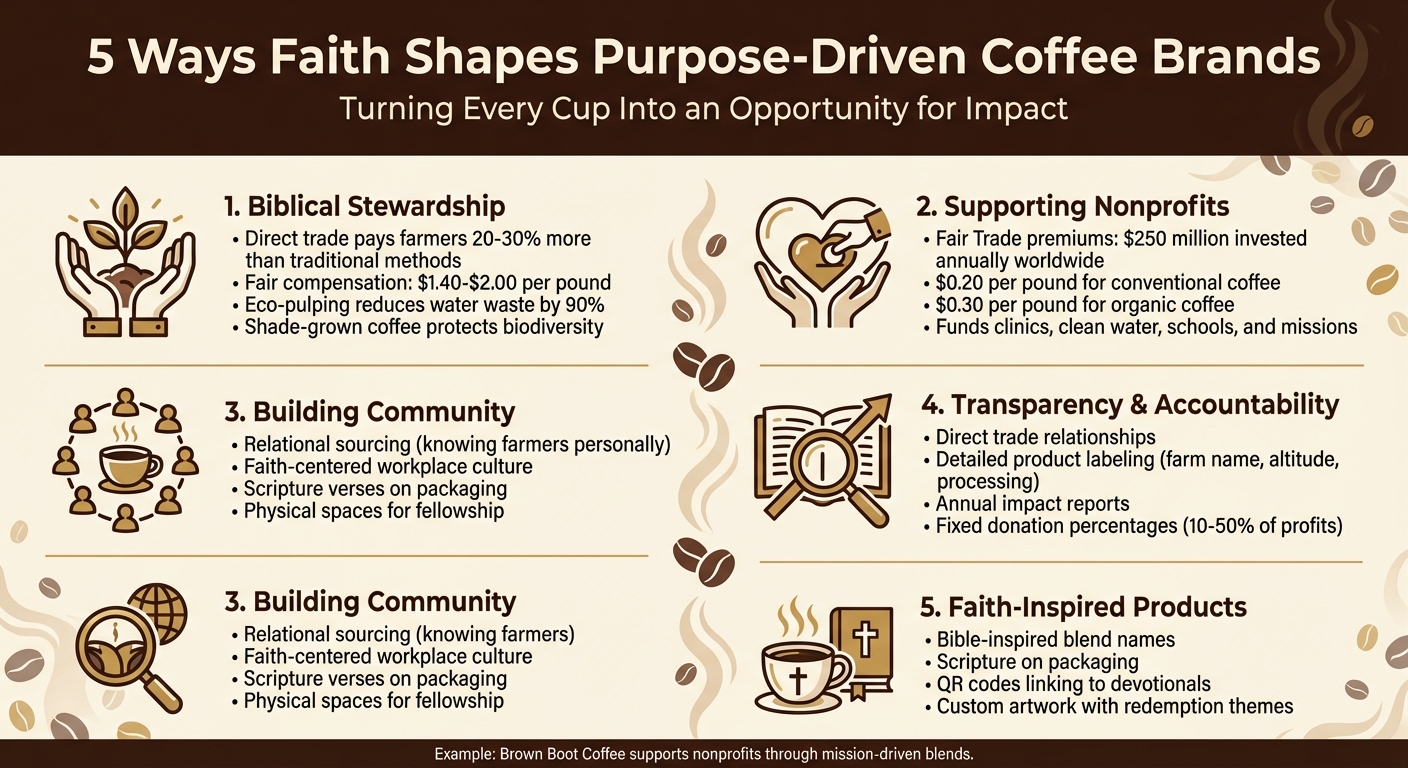
5 Ways Faith Shapes Purpose-Driven Coffee Brands
Christian Coffee Co. Partners With Israeli in 'Miraculous' Business
sbb-itb-c3999cb
1. Applying Biblical Stewardship to Business Operations
Biblical stewardship emphasizes the idea that we are caretakers of God's resources. Faith-driven coffee brands embrace this by seeing their role as more than just sourcing premium coffee beans - they are committed to supporting the farmers who grow them and prioritizing long-term well-being over quick profits. This perspective naturally aligns with fair-trade and ethical sourcing practices.
Take direct trade, for example. By working directly with farmers, these brands ensure growers earn 20–30% more than traditional methods, enabling them to better provide for their families and communities. Many roasters willingly pay between $1.40 and $2.00 per pound, treating fair compensation as a moral responsibility grounded in their faith.
Caring for creation, or "Creation Care", is another key aspect of this stewardship. Some coffee brands adopt eco-pulping techniques that reduce water waste by 90% and support shade-grown coffee to protect biodiversity. These aren't just environmentally conscious choices - they're seen as acts of worship, honoring God through responsible management of His creation.
This stewardship mindset extends to every cup of coffee. Roasters aim for excellence as a way of reflecting their values. Transparent packaging, which includes details like farm names, altitudes, and processing methods, not only highlights the bean's journey but also reinforces a commitment to honoring both people and the planet.
2. Supporting Nonprofits and Mission Work
These faith-based coffee brands take ethical sourcing and stewardship a step further by reinvesting their profits into causes aligned with their mission.
For many of these brands, supporting nonprofit organizations is at the heart of what they do. Every bag of coffee sold contributes to Kingdom-focused efforts, like funding missionaries or building schools in the regions where their coffee is grown.
Take Brown Boot Coffee, for example. They’ve partnered with Young Life Cherry Creek Schools to create the "You Were Brewed For This" blend. Proceeds from this blend directly support local youth ministry programs, turning every purchase into meaningful action.
On a broader scale, Fair Trade premiums play a significant role in this mission. Faith-based roasters contribute to the over $250 million invested annually in community projects worldwide. These premiums - $0.20 per pound for conventional coffee and $0.30 per pound for organic - help fund vital projects like clinics, clean water systems, and educational infrastructure.
For customers driven by faith, every cup of coffee becomes more than just a drink - it’s a way to live out Christian values while making a lasting difference. This commitment not only strengthens trust but also fosters deeper connections within the community.
3. Creating Community Around Shared Christian Values
These coffee brands go beyond ethical sourcing and stewardship by fostering community through shared Christian values. By weaving faith into their business practices, they transform both their sourcing relationships and customer interactions into meaningful connections.
A key aspect of this approach is relational sourcing. Instead of viewing farmers as mere suppliers, these brands focus on getting to know them personally - their names, their stories, their struggles. Tracy McKenzie, Founder of Back Alley Coffee Roasters, sums up this philosophy beautifully:
"We wanted to provide a product and place that blesses the community... business can be done with Kingdom values and in a way that contributes to the Kingdom of God".
This focus on relationships over transactions creates a network built on shared beliefs and mutual respect.
The sense of community extends inward as well. Employees are not just workers - they’re seen as individuals with spiritual and professional potential. McKenzie explains how he encourages his staff in a way inspired by Colossians 1:28, emphasizing their value and growth beyond their daily tasks. This approach fosters a workplace culture where people feel genuinely appreciated.
Even the packaging plays a role in connecting people. Scripture verses and redemption stories printed on coffee bags turn them into more than just products - they become tools for fellowship. Some blends are named after books of the Bible, while others highlight the stories of missionary families, helping customers feel part of a larger mission.
Physical spaces also serve as hubs for connection. Partnerships with local businesses, like barbershops, create opportunities for intentional conversations, prayer, and support. These spaces transform an everyday coffee trip into a chance for meaningful interactions.
Brown Boot Coffee is a shining example of this mission-driven approach, fostering authentic relationships among customers, employees, and partners through purposeful practices.
4. Maintaining Transparency and Accountability
For faith-driven brands, transparency isn’t just a business strategy - it’s a core value shaped by biblical principles. Proverbs 11:1 reminds us, "A false balance is an abomination to the Lord, but a just weight is His delight". This principle influences everything from sourcing and pricing to how these brands report their impact.
One way they uphold accountability is through direct trade relationships. This ensures farmers receive fair compensation without intermediaries. Tracy McKenzie, Founder of Back Alley Coffee Roasters, explains:
"We're trying to develop direct trade relationships with farmers - not even fair-trade, but direct trade so that we'll know exactly how much the farmer is getting paid".
This commitment to fairness and clarity extends to product labeling. Faith-based brands often include detailed information on every bag of coffee, such as the country, region, farm or cooperative name, altitude, varietal, processing method, and roast date. Nick Murphy of His Word Coffee captures this philosophy perfectly:
"Transparency isn't a burden for us. It's the foundation of trust".
Brown Boot Coffee exemplifies this by openly sharing how each purchase supports nonprofit organizations while providing clear details about its sourcing and mission partnerships. This level of openness in product information flows naturally into how these brands communicate their financial impact.
Many publish annual impact reports that outline how profits are used to support mission work and community development. Some go further by committing to fixed donation percentages, such as giving 10% of all sales or 50% of net profits to ministry partners. By sharing both sourcing and financial data openly, these brands transform every cup of coffee into a meaningful act of faith and trust.
5. Designing Products That Encourage Daily Faith
Faith-based brands have found a way to transform something as ordinary as morning coffee into a meaningful spiritual practice. By weaving Scripture and Christian themes into their products, they create opportunities for reflection in the everyday.
One way brands achieve this is through the thoughtful naming of their blends. Many choose names inspired by books of the Bible, pivotal biblical events, or virtues like grace and hope. These names spark contemplation and provide a subtle reminder of faith with each cup. The packaging often takes this a step further, acting as a kind of portable devotional. Some companies include the Scripture or theological narrative behind a blend’s name directly on the bag, offering customers a moment of reflection as they prepare their drink. Others feature custom artwork depicting themes like redemption or resurrection, or even include blessings, prayers, or words of encouragement. Some brands have gone digital, adding QR codes that link to daily devotionals, making it easier than ever to incorporate faith into routine moments.
Take Brown Boot Coffee as an example. Their mission-driven naming, like "You Were Brewed For This", reminds customers that their purchase is tied to a larger purpose. Blends such as Budaka Bold and Mayuge Morning highlight their nonprofit partnerships, keeping the focus on their mission with every pour. This approach not only inspires but also builds trust by showing that every purchase supports meaningful work.
For many of these brands, excellence in product quality is seen as an act of worship. Some describe the roasting process itself as a form of devotion, with each bag representing their dedication to both craftsmanship and faith. By combining high-quality coffee with faith-centered branding, they offer customers something more than just a beverage - each cup becomes a moment of sensory enjoyment and spiritual renewal.
Conclusion
Christian values influence purpose-driven coffee businesses in ways that go far beyond a simple exchange of goods. By practicing biblical stewardship, maintaining transparent accountability, and forming impactful nonprofit partnerships, these brands show that faith and business can thrive together. They create communities grounded in shared beliefs, turning everyday coffee rituals into moments of deeper spiritual connection.
This approach delivers tangible benefits for both local communities and coffee growers. Choosing a brand that allocates part of its profits to meaningful causes transforms each purchase into a contribution to the greater good - ensuring fairer pay for farmers and supporting mission-driven projects around the globe.
"Christian coffee brands are transforming the specialty coffee industry by proving that exceptional quality and Kingdom mission can coexist beautifully."
– Joe Hernandez, John 3:16 Coffee
Brown Boot Coffee exemplifies these values with blends like Budaka Bold and Mayuge Morning. These coffees not only deliver on quality but also channel proceeds into nonprofit initiatives, promoting community development and honoring the dignity of farmers.
FAQs
How can I verify a coffee brand’s donations are real?
When evaluating a coffee brand's claims about donations, focus on how openly they communicate the use of their profits. Do they provide specific details about their support for community projects or Christian missions? Look for brands that maintain clear and consistent practices in their business model and partnerships. For instance, some companies transparently outline how customer purchases contribute to nonprofits, which helps build accountability and trust.
What should I look for on a coffee bag to confirm ethical sourcing?
When choosing coffee or other products, keep an eye out for certifications such as Fair Trade or Direct Trade. These labels often signal a commitment to ethical practices. Additionally, look for transparency in the brand’s supply chain - brands that openly share how they work with farmers and support their communities are usually a good sign. These details can give you confidence that the sourcing aligns with ethical standards.
Does purpose-driven coffee cost more for customers?
Purpose-driven coffee often comes with a higher price tag, and there’s a good reason for that. Factors like ethical sourcing, maintaining high-quality standards, and supporting social or faith-based initiatives contribute to the cost. These practices typically involve extra expenses, which are reflected in the final price customers pay.