


Light vs Dark Roast: Which Coffee Is Right for You
When choosing between light and dark roast coffee, the main differences come down to flavor, acidity, body, and roast temperature. Light roasts are bright, fruity, and floral with higher acidity, while dark roasts are bold, smoky, and chocolatey with lower acidity. Despite common belief, caffeine content is nearly the same, though light roasts may have slightly more when measured by volume due to their denser beans.
Key Points:
- Light Roast: Bright, crisp flavors; higher acidity; tea-like body; roasted to 356°F–401°F.
- Dark Roast: Bold, smoky flavors; lower acidity; full-bodied texture; roasted to 464°F–482°F.
- Caffeine: Minimal difference; light roasts are denser, so they may have more caffeine per scoop.
- Brewing Tips: Light roasts work best with pour-over or drip methods, while dark roasts shine in French press or espresso.
Quick Comparison:
| Feature | Light Roast | Dark Roast |
|---|---|---|
| Flavor | Fruity, floral, bright | Smoky, chocolatey, bold |
| Acidity | High | Low |
| Body | Thin, tea-like | Heavy, full-bodied |
| Appearance | Light brown, matte | Dark brown/black, oily |
| Roast Temp | 356°F–401°F | 464°F–482°F |
The choice depends on your taste: light roasts preserve the bean's origin, while dark roasts emphasize the roasting process. Both can suit different brewing methods and pair well with specific foods.
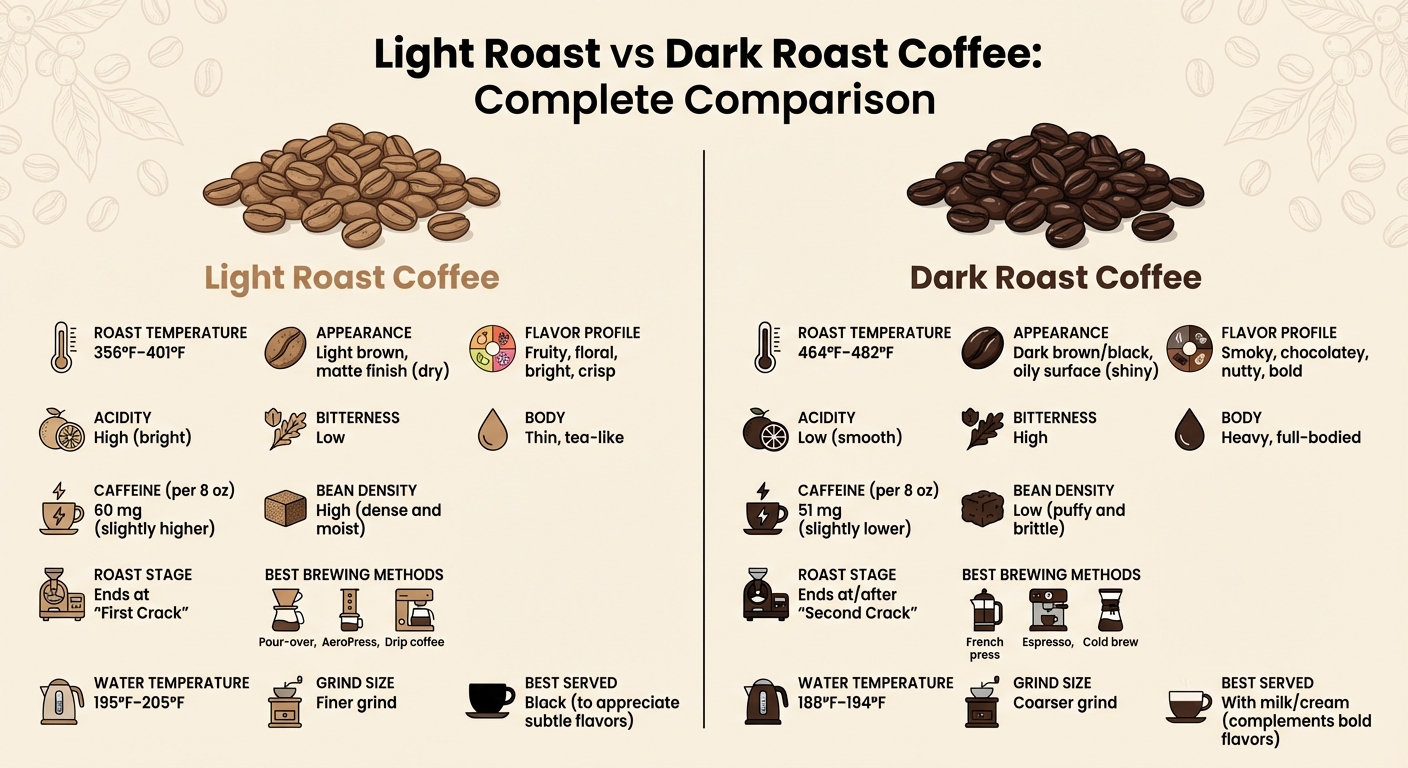
Light vs Dark Roast Coffee Comparison Chart
The Difference Between Light and Dark Roast
What Is Light Roast Coffee?
Light roast coffee stands out for its ability to preserve the natural flavors of the coffee bean. The roasting process lasts no more than 10 minutes, with temperatures ranging from 350°F to 400°F, and stops at the first crack. This shorter roasting time means the beans retain more internal moisture, making them denser and heavier compared to darker roasts.
Roasting Process and Appearance
Light roast beans are light brown with a matte finish, lacking the oily sheen typical of darker roasts. This is because the oils remain inside the bean rather than surfacing. You might also spot silverskin - a thin, papery layer - clinging to the crease of the bean, which is a hallmark of light roasting.
Flavor and Acidity
When it comes to flavor, light roasts shine with bright and complex profiles that emphasize the coffee's origin. Expect vibrant citrus, berry, floral, or herbal notes, often accompanied by a tea-like subtlety. The acidity is sharp and lively, giving the brew a crisp, refreshing quality. The body of the coffee is lighter and more delicate, much like a strong black tea. Because sugars in the bean undergo minimal caramelization, the coffee tends to be less sweet overall.
Caffeine Content
If measured by volume, light roast coffee contains about 60 mg of caffeine per serving, compared to 51 mg in dark roast. However, when measured by weight, the caffeine difference is negligible. This is because the denser, smaller light roast beans pack more individual particles - and therefore more caffeine - into a single scoop.
Next, we’ll dive into how dark roast coffee compares in both process and flavor.
What Is Dark Roast Coffee?
Dark roast coffee stands apart from light roast coffee in how the beans are roasted. While light roasts highlight the unique characteristics of the beans' origin, dark roasts focus on the flavors that develop during a longer, higher-temperature roasting process. These beans are roasted between 464°F and 482°F, far hotter than the 356°F to 401°F typical for light roasts. They’re roasted past the first crack and into the second, where the beans' structure begins to break down, and oils rise to the surface. This approach creates the distinct look, flavor, and body dark roasts are known for.
Roasting Process and Appearance
Dark roast beans are easy to spot - they’re dark brown to almost black, with a shiny, oily surface created by the oils brought to the surface during roasting. The extended roasting process also makes the beans less dense and more brittle due to moisture loss. During roasting, 800 to 1,000 aroma compounds are created, but dark roasts emphasize flavors from the roasting process rather than the beans' original traits.
Flavor and Bitterness
Dark roast coffee is bold and intense, featuring smoky and bittersweet flavors. You might taste hints of dark chocolate, cacao, toasted nuts, caramel, graham crackers, or warm spices. As The Coffee Bean & Tea Leaf puts it:
"Dark roast coffee typically has a bold, smoky taste since the coffee's country of origin flavors are almost entirely roasted out".
The extended roasting reduces acidity by breaking down chlorogenic acids, resulting in a smoother, less tangy flavor profile.
Body and Smoothness
One hallmark of dark roast coffee is its full-bodied, rich texture. The oils released during roasting give it a thick, silky mouthfeel that coats the palate. This makes dark roasts a great choice for milk-based drinks like lattes and cappuccinos. They’re also perfect for creating the dense, creamy crema that espresso lovers cherish.
Light vs Dark Roast: Key Differences
When it comes to coffee, the difference between light and dark roasts goes beyond just color. It impacts flavor, caffeine content, and even the texture of the beans. Let’s break it down.
Light roasts are roasted at temperatures between 356°F and 401°F, stopping right at the "first crack." Dark roasts, on the other hand, are roasted at much higher temperatures - 464°F to 482°F - reaching or surpassing the "second crack" stage. This temperature difference plays a big role in shaping the flavor and body of the coffee.
The most noticeable distinction lies in acidity and bitterness. Light roasts are known for their bright, crisp acidity with flavors reminiscent of citrus or green apples. Dark roasts, however, trade that acidity for a bolder, smokier taste with higher bitterness. Think deep chocolatey or nutty notes instead.
Caffeine content is another surprising difference. Despite the strong flavor of dark roasts, light roasts actually contain slightly more caffeine when measured by volume. Why? Dark roast beans lose density during the longer roasting process, making them lighter and puffier. This means you scoop fewer actual grounds when measuring dark roast by volume.
Here’s a quick comparison to help you see how these two roasts stack up:
Comparison Table
| Feature | Light Roast | Dark Roast |
|---|---|---|
| Roast Temperature | 356°F–401°F | 464°F–482°F |
| Appearance | Light brown, matte (dry) | Dark brown/black, oily (shiny) |
| Flavor Profile | Fruity, floral, bright, crisp | Smoky, chocolatey, nutty, bold |
| Acidity | High (bright) | Low (smooth) |
| Bitterness | Low | High |
| Body | Thin, tea-like | Heavy, full-bodied |
| Caffeine (by volume) | Slightly higher (60 mg per 8 oz) | Slightly lower (51 mg per 8 oz) |
| Bean Density | High (dense and moist) | Low (puffy and brittle) |
| Roast Stage | Ends at "First Crack" | Ends at/after "Second Crack" |
Each roast offers a distinct experience, so whether you crave the vibrant brightness of a light roast or the bold richness of a dark roast, there’s something to suit every palate.
sbb-itb-c3999cb
Best Brewing Methods for Each Roast
The roast level you choose makes a big difference in how your coffee tastes, and the brewing method plays a crucial role in bringing out the best in each roast. Light and dark roasts extract differently, so matching the right method to the roast helps highlight their unique flavors. Here's how to brew each roast to perfection.
Light Roast Brewing Tips
Light roasts are denser and less porous, which means they need a bit more care to extract their delicate flavors. Pour-over, AeroPress, or drip coffee work best because they allow precise control over water temperature and brewing time. This precision helps bring out the floral and fruity notes that make light roasts so special.
The ideal water temperature is between 195°F and 205°F. Use a finer grind than you would for dark roasts, as this improves extraction. A good starting point for your brewing ratio is 60 grams of coffee per liter of water (about 1:15 to 1:20).
"Light roasts are usually more acidic, but also tend to be fruitier. Dial in each bag of beans by changing one variable while keeping the others constant." - KBDFan42
If your coffee tastes too sour or sharp, it might be under-extracted. Try grinding finer or extending the brewing time by 10 to 30 seconds. On the flip side, if the brew feels harsh, adjust to a coarser grind. Light roasts are best enjoyed black to fully appreciate their subtle flavors. They pair wonderfully with fruity desserts like citrus tarts or berry muffins, and even soft cheeses like brie.
Now, let’s look at the best brewing methods for dark roasts.
Dark Roast Brewing Tips
Dark roasts extract much faster than light roasts, so they work well with methods like the French press, espresso, or cold brew. These methods balance the roast’s bold, smoky flavors without drawing out excessive bitterness.
For dark roasts, opt for a coarser grind and water temperatures between 188°F and 194°F. This helps avoid over-extraction and keeps the flavors balanced.
"Darker-roasted coffees work great in milk as their heavier body and boldness help cut through the fat of the milk and allow the underlying coffee taste to shine through." - Coffee Bros
If you're making espresso, set your machine to a slightly lower temperature range of 192°F to 198°F. Dark roasts shine in milk-based drinks like lattes and cappuccinos, thanks to their full body and bold flavors. For a smoother, less acidic option, try cold brewing your dark roast - it highlights the rich chocolate and nutty notes beautifully.
Pairing Suggestions
Light roasts are best savored black to enjoy their complex layers. They pair nicely with breakfast pastries like croissants or lighter desserts. Dark roasts, on the other hand, can stand up to cream, sugar, and bold flavors. They’re fantastic with dark chocolate desserts, toasted nuts, or treats featuring caramel or warm spices. These pairings complement the brewing methods and let you experience each roast to its fullest.
Brown Boot Coffee's Light and Dark Roast Options
Now that you've mastered how to brew each roast, let’s explore Brown Boot Coffee's exclusive blends. Each one brings its own unique flavor profile, crafted to suit a variety of preferences.
Light Roast: Clyde's Roast
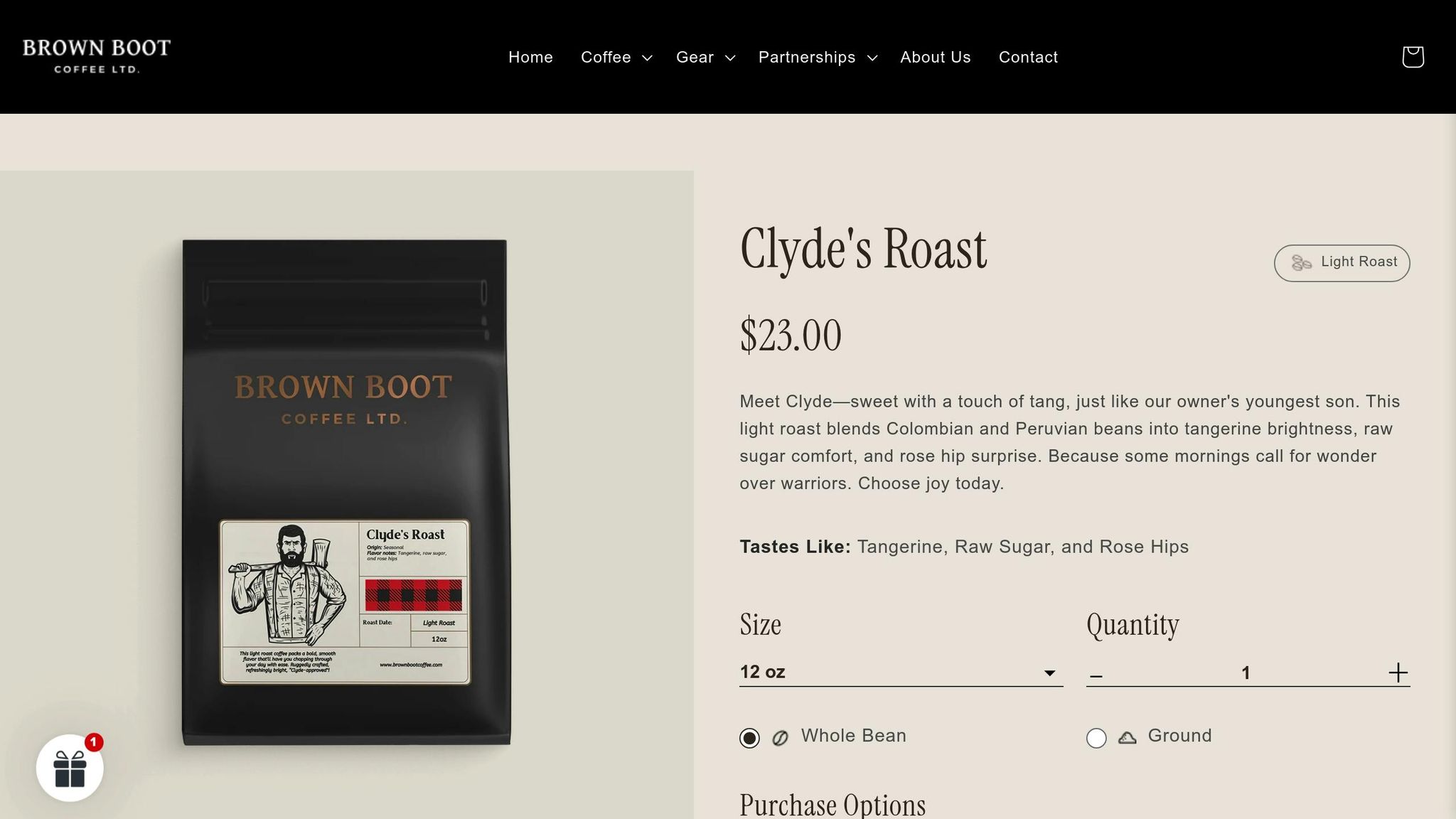
Clyde's Roast, priced at $23.00, delivers a sweet, tangy flavor while preserving the natural origin of the beans. With its light brown, matte finish, this roast is all about subtlety and finesse.
"Meet Clyde - sweet with a touch of tang, just like our owner's youngest son." – Brown Boot Coffee
This roast is best enjoyed using pour-over or drip brewing methods, which enhance its floral and fruity notes. For the full experience, drink it black to appreciate its delicate complexity. Adding heavy cream might overshadow its gentle acidity.
If you’re after something with a more intense punch, their dark roasts might be just what you need.
Dark Roasts: Bison Blend and Budaka Bold
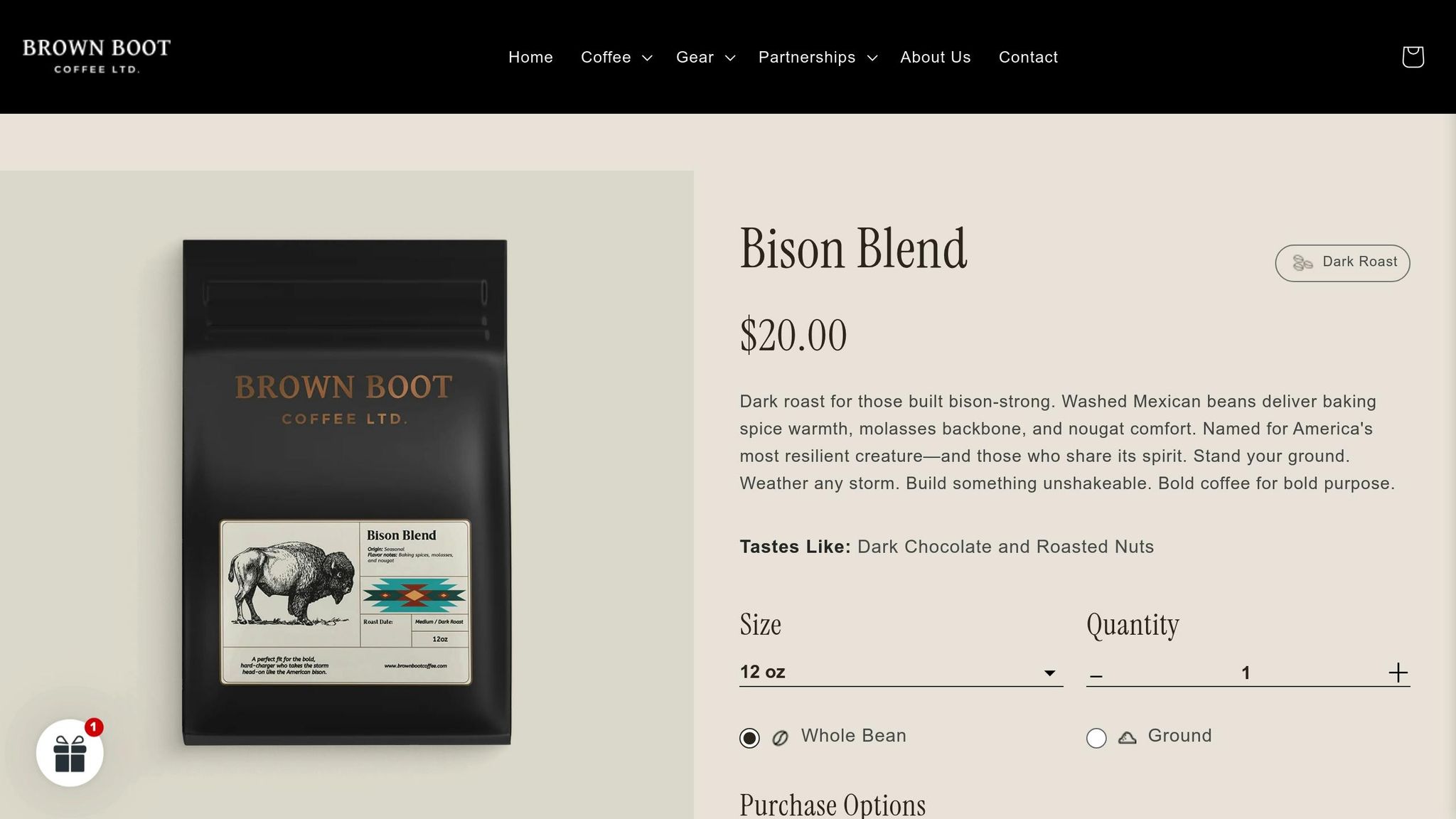
For those who crave a more robust cup, Brown Boot Coffee offers two standout dark roasts. Bison Blend ($20.00) is made from washed Mexican beans and delivers a warm, bold flavor with hints of baking spices and molasses. It’s a strong brew that pairs perfectly with milk and sugar.
"Dark roast for those built bison-strong." – Brown Boot Coffee
On the other hand, Budaka Bold ($25.00) combines rich flavor with purpose, supporting the Musana mission's community efforts. Both dark roasts feature a full-bodied profile with a roasted sweetness that lingers. Their shiny appearance reflects the extended roasting process.
"Premium coffee that works as hard as you do." – Brown Boot Coffee
How to Choose the Right Roast for You
Taste Preferences
When it comes to choosing the right roast, your taste preferences should take center stage. If you’re drawn to bright, crisp, and layered flavors - think citrus, floral notes, or hints of berries - a light roast like Clyde's Roast could be your match. These roasts highlight the bean's origin and natural characteristics . On the other hand, if you prefer bolder flavors like dark chocolate, smoky undertones, or toasted nuts, a dark roast such as Bison Blend or Budaka Bold might be just what you need. Dark roasts are also lower in acidity, offering a smoother experience that pairs well with milk or cream.
Caffeine and Daily Habits
Caffeine content can also play a role in your decision. Measured by weight, light roasts are slightly denser in caffeine (1.13%) compared to dark roasts (1.08%). However, if you’re measuring by scoops, the difference may not be as noticeable. Light roasts are great for a morning pick-me-up, while dark roasts are a better choice later in the day - especially if you have a sensitive stomach. Certain compounds in dark roasts may help reduce gastric acid stimulation, making them a gentler option. Consider these factors when matching your roast to your daily routine.
Try Brown Boot Coffee Blends
Looking for the perfect blend to suit your lifestyle? Brown Boot Coffee offers roasts that cater to a variety of preferences. For a bright and lively cup, try Clyde's Roast ($23.00) - perfect for pour-over or drip brewing. If you’re more into dark roasts, Bison Blend ($20.00) delivers warm baking spice and molasses notes, while Budaka Bold ($25.00) provides a rich, full-bodied flavor. Both dark roasts pair wonderfully with milk and sugar, making them ideal for lattes or cream-based drinks. Whatever your preference, there’s a blend ready to match your taste.
Conclusion
When choosing between light and dark roast coffee, it all comes down to your flavor preferences. Light roasts, like Clyde's Roast, highlight the bean's natural qualities with bright, fruity, and floral notes alongside higher acidity. On the other hand, dark roasts, such as Bison Blend and Budaka Bold, deliver bold, smoky, and chocolatey flavors with a richer body and lower acidity.
While the caffeine difference is minimal - light roasts contain 1.13% caffeine compared to 1.08% in dark roasts - your decision should focus on flavor and how coffee fits into your daily routine.
These differences also influence how you brew and enjoy your coffee. Light roasts pair well with pour-over or drip methods, while dark roasts shine in a French press or espresso. Additionally, light roasts retain more antioxidants, while dark roasts are easier on the stomach and can reduce pesticide residues by up to 99.8% during roasting.
Brown Boot Coffee offers specialty blends that let you explore both options. Whether you prefer the sweet, tangy profile of Clyde's Roast ($23.00) or the warm, spiced notes of Bison Blend ($20.00), each purchase supports nonprofit organizations, making your coffee choice meaningful.
Ultimately, the best roast is the one that matches your taste and lifestyle. Try both to discover your favorite, and remember - freshness always trumps roast level when it comes to quality. Dive into the spectrum of flavors and enjoy a cup that not only delights your palate but also contributes to a greater cause.
FAQs
How do I know if my coffee is under-extracted or over-extracted?
When coffee is under-extracted, it often tastes weak, sour, or even grassy. On the other hand, over-extracted coffee tends to have a bitter, harsh, or overly astringent flavor. To pinpoint these issues, rely on your senses - taste and aroma provide key clues. Additionally, visual cues, like the color and texture of the brew, can help you identify if something’s off with the extraction process.
Which roast is best if I have acid reflux or a sensitive stomach?
Dark roast coffee tends to be a gentler option for people dealing with acid reflux or sensitive stomachs. It includes compounds that might help lower stomach acid production, making it less likely to trigger symptoms like heartburn or bloating. In contrast, light roast coffee is more acidic, which can aggravate gastrointestinal discomfort for those with sensitivities.
Should I measure coffee by weight or by scoops for consistent caffeine?
Measuring coffee by weight is the best way to guarantee consistent caffeine content. Here's why: dark roast beans lose water during the roasting process, making them less dense than light roast beans. If you measure coffee by volume (like using scoops), the caffeine levels can vary significantly between roast types. A scale removes this inconsistency, ensuring you get the same amount of coffee - and caffeine - no matter the roast.