


Best Coffee Roasts for Every Time of Day: A Roundup
Want the perfect coffee for every moment of your day? Here’s the quick answer:
- Morning: Start strong with light roasts (bright, fruity flavors, high caffeine) or medium roasts (balanced, caramel notes). Brew with pour-over or French press for the best results.
- Afternoon: Stay focused with medium or medium-dark roasts (smooth, chocolatey flavors, moderate caffeine). Ideal for drip machines or espresso.
- Evening: Unwind with dark roasts (bold, smoky flavors, lowest caffeine). Try espresso or French press for a rich, relaxing cup.
Why it matters: Light roasts energize your mornings; medium roasts keep you steady in the afternoon; dark roasts help you relax at night without disrupting sleep. Pair the right roast with your schedule to enhance both flavor and function.
Quick Tip: Brew temperatures and methods make a difference. Light roasts shine at 200°F–205°F, while dark roasts prefer 195°F–205°F. Adjust for flavor and caffeine needs.
Keep reading to discover specific roast recommendations and brewing tips for every time of day.
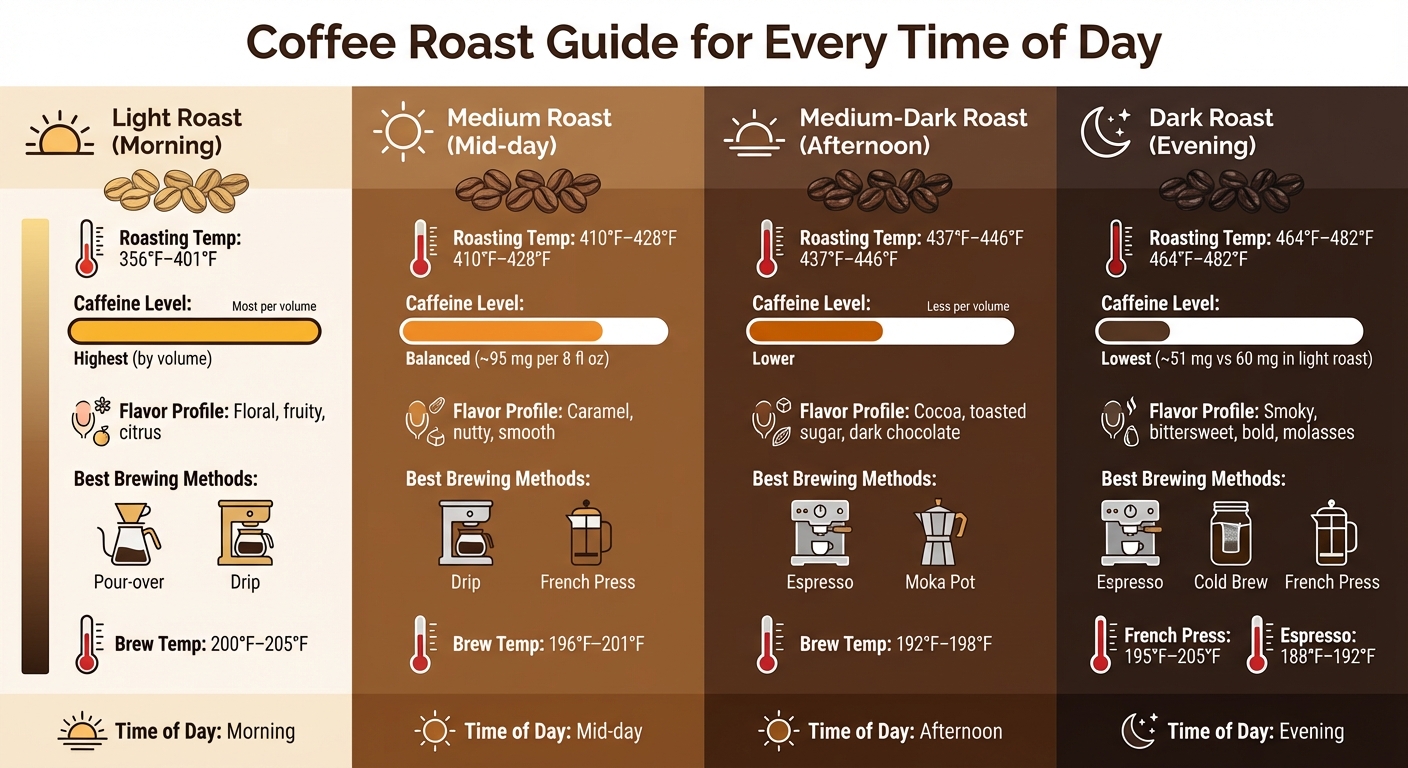
Coffee Roast Guide by Time of Day: Caffeine Levels, Flavors, and Brewing Methods
Coffee Roasting Explained
sbb-itb-c3999cb
Morning: Light and Medium Roasts for Energy
Start your day with a coffee that complements your body's natural rhythm. Light and medium roasts not only offer a caffeine boost but also bring unique flavor profiles to the table, perfect for energizing your morning.
Light Roasts: Bright Flavors with a Kick
Light roasts are roasted just to the first crack (350°F–400°F), which keeps their beans denser and preserves a higher caffeine content. These roasts are known for their lively flavors, often featuring fruity or citrusy notes.
Take Clyde's Roast from Brown Boot Coffee, for example - it’s a sweet, tangy delight that embodies the best of light roasts.
To get the most out of light roasts, consider brewing them manually with methods like pour-over, Chemex, or AeroPress. Use water heated to 200°F–205°F for a clean, vibrant cup. If you’re looking for something with a little more body and less acidity, medium roasts might be your go-to.
Medium Roasts: Smooth and Balanced
Medium roasts are a great choice if you prefer a gentler start to your day. Roasted at 400°F–430°F, they offer a balance between the bean’s natural flavors and the deeper, richer notes developed during roasting. Expect hints of caramel, chocolate, or nuts, paired with moderate caffeine levels.
For a versatile medium roast, try Mayuge Morning. It delivers a fuller-bodied cup that works wonderfully in drip machines, French presses, or even as a cold brew. Enjoy it black or with milk - it’s a reliable option no matter your preference.
To highlight the natural sweetness of medium roasts without introducing bitterness, brew them at slightly cooler temperatures, around 196°F–201°F. This approach brings out their rich, smooth character, making them an ideal morning coffee companion.
Afternoon: Medium and Medium-Dark Roasts for Focus
After the morning caffeine rush, the afternoon calls for a coffee that keeps you focused without overdoing it. Medium and medium-dark roasts strike the perfect balance, offering enough caffeine to stay alert along with rich, enjoyable flavors that keep you coming back for more. These roasts are ideal for tackling that midday slump while avoiding the risk of feeling overstimulated.
Medium roasts typically have around 95 mg of caffeine per 8 fl oz cup, while medium-dark roasts, due to their longer roasting process, have slightly less caffeine. This makes them a great choice for maintaining focus without the jitters. Plus, their flavor profiles - ranging from milk chocolate and caramel in medium roasts to dark chocolate and spice in medium-dark roasts - add a touch of indulgence to your afternoon.
Medium Roasts: Smooth and Balanced
Medium roasts are a great choice for an afternoon pick-me-up. Their smooth flavor and balanced acidity make them versatile for different brewing methods, whether you prefer a drip machine, French press, or pour-over. For the best results, brew them at 196°F–201°F to achieve the perfect extraction.
If you’re someone who starts to feel the effects of caffeine later in the day, a decaf medium roast is a fantastic option. It retains the same delicious flavor notes - like caramel and toasted nuts - but without the stimulant effects, allowing you to enjoy your coffee ritual without the buzz.
Medium-Dark Roasts: Bold and Flavorful
For a richer afternoon coffee, medium-dark roasts, also known as Full City roasts, are a standout choice. These beans are roasted to the point of the "second crack", giving them a slight oil sheen and deeper caramelized flavors. The result? A fuller-bodied coffee with bittersweet chocolate, spice, and toasted sugar notes that feel indulgent without being overpowering.
Medium-dark roasts shine in milk-based drinks like lattes and cappuccinos, where their bold flavors pair beautifully with creamy textures. To get the best out of these beans, use a slightly lower brewing temperature - 192°F–198°F - to avoid over-extraction, as their flavors develop quickly.
Whether you lean toward the smoothness of a medium roast or the boldness of a medium-dark, these options ensure your afternoon coffee keeps you focused and satisfied.
Evening: Dark Roasts for Relaxation
Mornings call for lighter roasts to kickstart your day, and balanced roasts keep your afternoons steady. But when it comes to winding down in the evening, dark roasts take center stage. Thanks to their longer roasting process at high temperatures (464°F–482°F), dark roasts naturally have the least caffeine compared to lighter options. For instance, a study shows that while a serving of light roast contains about 60 mg of caffeine, the same amount of dark roast has closer to 51 mg.
Dark roasts also bring lower acidity to the table, making them gentler on the stomach and smoother to sip. With flavor notes like dark chocolate, molasses, and toasted nuts, these roasts offer a cozy, roast-forward experience. If you're looking for evening picks from Brown Boot Coffee, their Bison Blend and Budaka Bold are excellent choices, offering rich chocolate and molasses undertones with a mellow caffeine kick.
Dark Roasts: Bold Flavors with Lower Caffeine
The extended roasting process does more than just deepen the flavor; it changes the beans entirely. During the "second crack", which happens around 446°F, the beans expand and lose some of their caffeine content. This process also enhances their bittersweet, syrupy flavor profile. The result? A full-bodied, satisfying cup that’s perfect for evenings without disrupting your sleep.
Brewing these dark roasts correctly is the key to unlocking their rich, bold flavors.
Brewing Dark Roasts for Evening
For a French press, go with a coarse grind and steep your coffee for 4–5 minutes at a temperature between 195°F and 205°F. This method brings out the full body and natural oils of blends like Bison Blend and Budaka Bold. If espresso is more your style, use a fine grind and aim for an extraction time of 25–30 seconds at 188°F–192°F to avoid any burnt or overly bitter notes. Whichever method you choose, using filtered water ensures the chocolatey sweetness and molasses flavors truly shine.
Roast Profiles: Flavor, Caffeine, and Brewing Methods
Understanding coffee roast profiles is key to refining your coffee experience. Each roast level not only impacts flavor but also influences caffeine content and brewing techniques, helping you make more informed choices.
Light roasts highlight the bean's natural, bright flavors with fruity and floral notes. Medium roasts offer a more rounded taste, often with hints of caramel and nuts. Dark roasts, on the other hand, deliver bold, smoky, and chocolatey flavors. These differences also guide the brewing methods that best complement each roast.
When it comes to caffeine, the measurement method matters. By volume, light roasts generally have more caffeine because they are denser. However, by weight, dark roasts can pack more caffeine since they lose more moisture during roasting. For instance, a 35g serving of light roast contains around 490 mg of caffeine, while the same weight of a French dark roast delivers approximately 600 mg.
"Roasting brings out the aroma and flavor that is locked inside the green coffee beans…roasting causes chemical changes to take place as the beans are rapidly brought to very high temperatures."
Brewing methods also play a vital role in bringing out the best in each roast. Light roasts are well-suited for pour-over and drip brewing, which highlight their delicate acidity. Medium roasts shine in drip machines, French presses, or even espresso, thanks to their versatility. Dark roasts, with their bold flavors, are perfect for espresso machines, Moka pots, or cold brew, offering a rich, low-acid cup that pairs beautifully with milk.
Roast Comparison Table
| Roast Level | Temperature | Caffeine (by volume) | Flavor Notes | Best Brewing Methods | Time of Day |
|---|---|---|---|---|---|
| Light | 356°F–401°F | Highest | Floral, fruity, citrus | Pour-over, Drip | Morning |
| Medium | 410°F–428°F | Balanced | Caramel, nutty, smooth | Drip, French Press | Mid-day |
| Medium-Dark | 437°F–446°F | Lower | Cocoa, toasted sugar | Espresso, Moka Pot | Afternoon |
| Dark | 464°F–482°F | Lowest | Smoky, bittersweet, bold | Espresso, Cold Brew | Evening |
Conclusion
Pick the right roast to fuel your day from start to finish. Light roasts kickstart your morning with their bright, fruity notes and higher caffeine content. Medium roasts keep your afternoons balanced, offering smooth caramel and nutty flavors. Dark roasts help you unwind in the evening, delivering bold, smoky profiles with lower acidity. These options make it easy to find a coffee that fits your schedule and mood.
As one expert puts it, "Light roasts are like sunshine in a cup. They bring vibrancy, sharpness, and a sense of freshness - ideal if your mornings need a spark of inspiration". In contrast, dark roasts "bring depth and gravity. They're grounding, serious, and bold - the kind of coffee that says: let's get things done".
To get the most out of your coffee, pair your brewing method with the roast. Light roasts are perfect for pour-overs, while dark roasts perform best in espresso machines or cold brew setups.
At Brown Boot Coffee, we’ve crafted a selection to match every moment of your day while giving back to the community. Whether it’s Clyde's Roast for a tangy morning boost, Bootstrap Blend for a smooth afternoon, or Bison Blend for an intense evening sip, every purchase supports nonprofit initiatives. Discover the roast that complements your rhythm and makes a difference.
FAQs
Do light roasts really have more caffeine?
Yes, light roasts generally contain more caffeine than darker roasts when measured by volume. This happens because light roasts are denser, as they lose less water during the roasting process. However, if you're measuring by weight instead of volume, the caffeine content across different roast levels is nearly identical.
What roast is best if coffee upsets my stomach?
Light roast coffee is a great choice if regular coffee tends to upset your stomach. It generally has less acidity and preserves more of the bean's natural flavors, which can make it easier on digestion. For those with sensitive stomachs, opting for a light roast can offer a smoother, enjoyable coffee experience without the discomfort.
How can I make evening coffee less likely to affect sleep?
To keep your evening coffee from interfering with your sleep, consider going for a dark roast. Surprisingly, dark roasts generally have less caffeine than their lighter counterparts. Another option is switching to decaffeinated coffee, or simply cutting back on how much you drink as the day winds down. Timing matters too - steer clear of coffee close to bedtime to reduce the chances of disrupting your rest. Choosing a coffee with naturally lower caffeine levels can make enjoying a cup later in the day a little easier on your sleep.