


Faith vs. Profit: Finding Balance in Business
Balancing faith and profit is a challenge many Christian entrepreneurs face. The key takeaway? You don’t have to choose one over the other - both can work together. By integrating biblical principles like integrity, stewardship, servant leadership, and generosity into your business, you can honor your faith while achieving financial success.
Key Points:
- Faith and Profit Can Coexist: Ethical practices rooted in faith often lead to higher employee retention (40%) and increased profitability (21%).
- Biblical Principles in Business: Integrity, stewardship, servant leadership, and generosity guide decision-making and build trust.
- Profit Fuels Purpose: Profit isn’t just financial gain - it’s a tool to grow, innovate, and support charitable efforts.
- Real-World Example: Brown Boot Coffee integrates faith into its operations by donating profits and maintaining fair pricing without compromising quality.
Faith-Driven Business Priorities
Biblical Principles for Business
Christian principles provide a strong foundation for making business decisions that align with faith. At the heart of these principles is integrity - ensuring fairness in pricing, contracts, and marketing. This means staying honest, even when it might lead to short-term sacrifices.
Stewardship offers a transformative perspective. By seeing yourself as a manager of God's resources - whether it's time, talent, or money - you prioritize eternal impact over immediate profits. This mindset acknowledges God as the ultimate "majority shareholder", shaping decisions to reflect His will.
Servant leadership draws directly from Jesus's example of humility, such as washing His disciples' feet. It shifts the focus from personal gain to serving others - employees, customers, and the community. This approach fosters respect, collaboration, and a workplace culture rooted in humility.
Generosity goes beyond charitable donations. It includes paying fair wages, creating jobs, and offering quality products at reasonable prices, aligning with the principles found in Leviticus 19:13. Generosity becomes a way of life, embedded in the business model itself.
Finally, there's excellence as worship. Performing work to the highest standards is seen as an act of worship, not for accolades but as a way to honor God. This principle encourages businesses to deliver exceptional quality and service as a reflection of their faith.
These biblical values provide a roadmap for running a business that balances profitability with faith, showing that financial success doesn't have to come at the expense of core beliefs.
Faith in Action: Real Business Examples
Brown Boot Coffee demonstrates how these principles can shape a business. Generosity is built into their model - every purchase of their specialty coffee supports nonprofit organizations, with no additional cost to customers. This makes giving a seamless part of their operations.
Their product lineup, including blends like Bison Blend, Budaka Bold, Clyde's Roast, and Mayuge Morning, embodies the idea of quality as worship. Each blend is crafted with care, reflecting a commitment to excellence as a way to serve both God and their customers.
This faith-driven approach extends to decisions about pricing, partnerships, and profit distribution. By viewing resources as tools for Kingdom impact, Brown Boot Coffee shows that stewardship and profitability can work hand in hand. The result is a business that honors God while making a positive difference in the lives of customers and communities.
sbb-itb-c3999cb
Profit-Driven Business Priorities
Why Profit Matters for Business Growth
Profit is the backbone of any business, fueling its ability to grow, innovate, and navigate risks. It’s what keeps the mission alive and allows companies to make a meaningful impact in their communities and beyond.
From a biblical perspective, profit is seen as a tool for wise stewardship. The Parable of the Talents highlights the importance of managing resources effectively and multiplying them. Profit isn’t just about financial gain - it’s about enabling businesses to fulfill their purpose, fund new ideas, and support charitable efforts that rely on the surplus generated by thriving organizations.
Profit also plays a critical role in risk management. It provides a safety net during tough times, ensuring that businesses can weather downturns and tackle unforeseen challenges. This financial cushion allows companies to stay true to their principles, even when market pressures intensify. Without it, businesses may face difficult choices that could compromise their values just to stay afloat.
Ultimately, profitability not only supports growth but also reinforces ethical commitments. It creates the stability needed to maintain integrity, even in the face of fierce competition.
Staying Competitive While Maintaining Integrity
While profit is essential, staying true to ethical principles is equally important - especially in a competitive market.
Balancing profitability and ethics can be tough. Competitors may cut corners with exploitative practices or misleading advertising, making it harder for businesses committed to integrity to compete. The pressure for short-term gains can sometimes clash with long-term ethical goals.
However, businesses that fully integrate their values into their operations often find that excellence becomes their edge. Jeff Van Duzer, author of Why Business Matters to God, explains:
"The primary purpose of a business should be to serve communities and workers in alignment with Christian values... while the pursuit of profit is essential, it should not be the ultimate goal of a business."
This approach fosters trust among stakeholders, enhances brand reputation, and builds resilience during economic challenges.
Ethical audits and decision-making grounded in biblical principles, such as Proverbs 11:1, help businesses maintain their integrity even under pressure. Open communication with investors and stakeholders about ethical challenges further reinforces this commitment. By treating profit as a way to demonstrate value - rather than an end goal - businesses can inspire others to adopt similar ethical practices when they see the success it brings.
How Hobby Lobby Built an $8B Business Without Losing Its Soul | David Green | FDE Podcast Ep. 362
Faith vs. Profit: Key Challenges and Comparisons
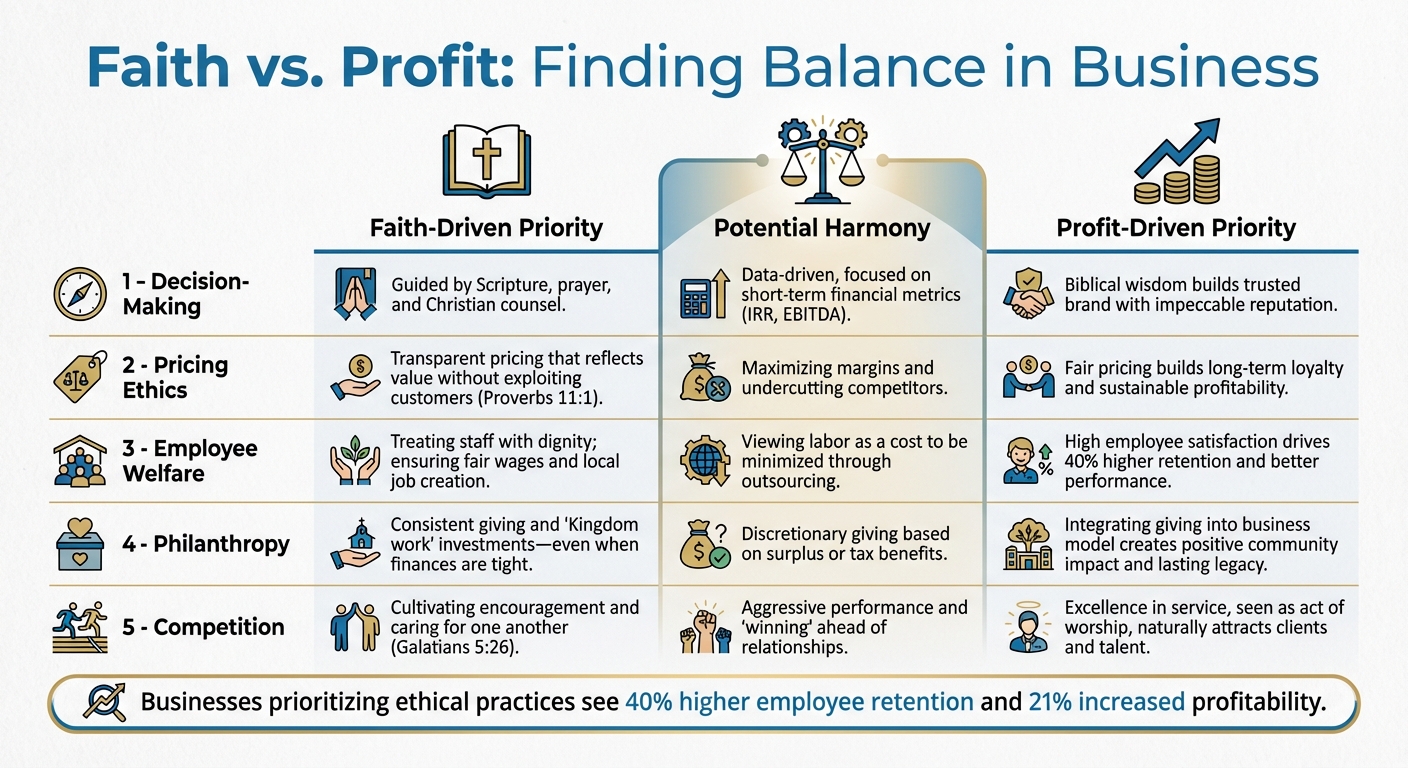
Faith-Driven vs Profit-Driven Business Priorities Comparison
Balancing faith and profit presents a unique set of challenges that businesses must navigate daily. Profit-driven models often prioritize short-term gains like quarterly earnings and immediate returns, whereas faith-driven approaches focus on long-term stewardship and creating lasting impact . This fundamental difference influences key areas like hiring practices, pricing strategies, and competitive behavior.
One major challenge lies in employee welfare. Faith-driven businesses tend to treat employees as part of a family, emphasizing fair wages and respect for their dignity. On the other hand, profit-focused models may view labor primarily as a cost to be minimized, often through outsourcing or budget reductions . Similarly, pricing decisions can highlight this tension, as businesses must choose between maximizing profit margins and maintaining accessibility for customers.
These internal challenges naturally spill over into external competition. For example, aggressive sales tactics and a focus on dominating the market can clash with efforts to create a culture rooted in care and support. Striking a balance between ethical practices and profitability remains a constant test for businesses operating at this intersection.
Comparison Table: Faith vs. Profit
| Feature | Faith-Driven Priority | Profit-Driven Priority | Potential Harmony |
|---|---|---|---|
| Decision-Making | Guided by Scripture, prayer, and Christian counsel | Data-driven, focused on short-term financial metrics (IRR, EBITDA) | Biblical wisdom can build a trusted brand with an impeccable reputation. |
| Pricing Ethics | Transparent pricing that reflects value without exploiting customers (Proverbs 11:1) | Maximizing margins and undercutting competitors | Fair pricing builds long-term loyalty and sustainable profitability. |
| Employee Welfare | Treating staff with dignity; ensuring fair wages and local job creation | Viewing labor as a cost to be minimized through outsourcing | High employee satisfaction drives 40% higher retention and better performance. |
| Philanthropy | Consistent giving and "Kingdom work" investments - even when finances are tight | Discretionary giving based on surplus or tax benefits | Integrating giving into the business model creates positive community impact and lasting legacy. |
| Competition | Cultivating encouragement and caring for one another (Galatians 5:26) | Aggressive performance and "winning" ahead of relationships | Excellence in service, seen as an act of worship, naturally attracts clients and talent. |
The encouraging part is that these challenges don’t have to result in compromise. Businesses that prioritize ethical practices often see 40% higher employee retention and demonstrate greater resilience during tough economic times. When profit aligns with ethical values, it becomes a powerful tool for driving both long-term business success and meaningful impact.
Brown Boot Coffee: Balancing Faith and Profit
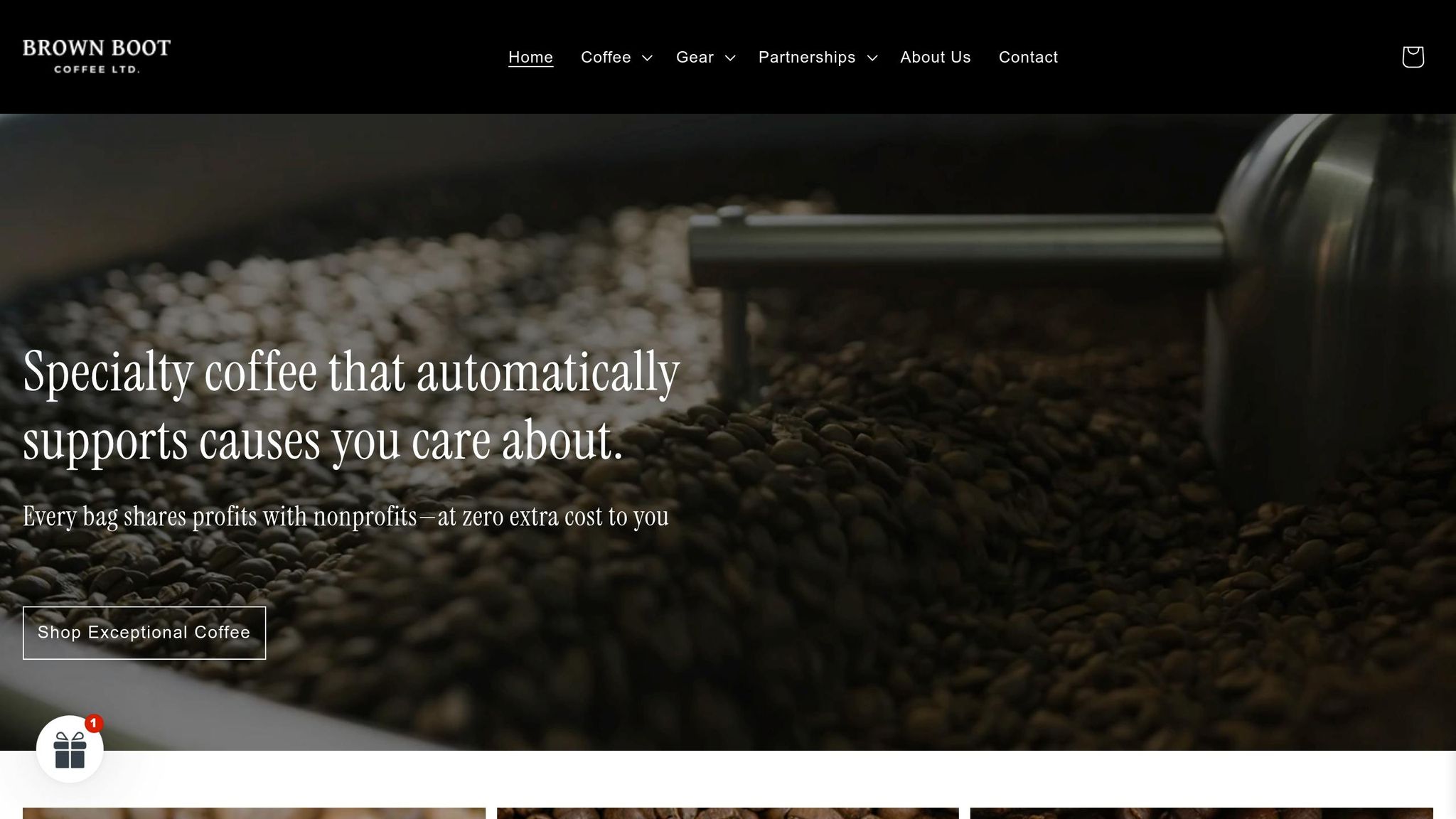
Purpose-Driven Practices at Brown Boot Coffee
Brown Boot Coffee weaves faith into its business model by embedding charitable giving into every sale. Founded in 2024 by Luke and Haley, this specialty Christian coffee roaster donates a portion of profits from each bag sold to nonprofits - without passing any additional costs to customers. This approach shifts the responsibility of giving from the customer to the company itself.
The company’s Christian values are reflected in its product names and branding. Each blend carries a personal story tied to faith and family. For instance, Clyde's Roast is named after the founders' youngest son, while Dick's Decaf honors Luke’s grandfather. This personal touch underscores their belief in the importance of people and their stories, transforming coffee into a tool for sharing Christ’s love and fostering authentic connections.
Brown Boot Coffee’s branding also targets ambitious, purpose-driven entrepreneurs. The brown boot symbolizes resilience, humility, and enduring strength, aligning the company’s identity with its Christian mission. This thoughtful branding creates a connection with consumers who value perseverance and service.
Through these practices, Brown Boot Coffee has built a business model that blends profitability with a commitment to ethical and faith-driven principles.
Faith and Profit Working Together: Lessons from Brown Boot Coffee
Brown Boot Coffee also highlights how ethical values can drive financial success. By integrating faith-based ethics into every aspect of the business, the company ensures high-quality products while maintaining fair pricing. Their specialty beans include natural Ethiopian, washed Mexican, and Colombian varieties, all offered at an accessible price point of around $20.00 per bag. This balance between quality and affordability reflects their dedication to ethical business practices.
The company’s model offers a roadmap for other faith-driven entrepreneurs. By making charitable giving a core part of their operations instead of an afterthought, Brown Boot Coffee proves that mission and profit can coexist. Far from limiting growth, their explicit Christian identity has become a strength, attracting customers who value making a difference with their purchases.
Strategies for Balancing Faith and Profit
Prayer-Based Planning and Decision-Making
Start with spiritual guidance before diving into business tasks. Dedicate time daily for prayer and reflection before tackling emails or your to-do list. This habit helps anchor decisions in your faith, ensuring they're rooted in spiritual values rather than the pressures of the day. As Proverbs 3:5-6 says, "Trust in the Lord with all your heart and lean not on your own understanding; in all your ways submit to him, and he will make your paths straight".
When faced with decisions, ask yourself: Does this honor God? Is it fair to everyone involved? Would I feel comfortable sharing this choice publicly?. These questions act as a moral compass when business options seem unclear or tempting but might stray from your values. For added clarity, connect with a faith-driven entrepreneurial group or seek guidance from a mentor during pivotal moments. Grounding your daily actions in prayer and reflection paves the way for meaningful and spiritually aligned success.
Tithing and Charitable Giving
Build generosity into your business plan. Set aside a portion of your budget specifically for giving, ensuring that your charitable actions are intentional and sustainable. While profit is necessary to maintain and grow your business, it also serves a higher purpose: advancing God’s work and helping others.
Consider creating a Christian business ethics handbook to outline your principles on issues like balancing competition with compassion or prioritizing generosity over greed. This resource can guide your team when navigating tough ethical choices. As Proverbs 11:25 reminds us, "A generous person will prosper; whoever refreshes others will be refreshed". Ultimately, success should be about more than financial gain - it’s about the positive impact you create.
Measuring Success Beyond Revenue
Profit margins alone don’t define success. Ethical practices can lead to tangible benefits, like improved employee retention and stronger profitability. But it’s equally important to track other metrics: employee well-being through fair pay and work-life balance, community impact through partnerships and service, and spiritual stewardship by how your business reflects God’s principles.
Set boundaries that protect time for worship and rest - such as closing on Sundays - to maintain balance and purpose. Regularly review your suppliers and partners to ensure they align with your ethical values. By focusing on these broader measures, you’ll demonstrate that success is about more than revenue - it’s about the people you uplift and the values you uphold.
Conclusion
Faith and profit aren't opposing forces - they can thrive together when woven into every decision. By grounding your business in biblical principles, you're not giving up success; you're reshaping how it's defined. Ethical practices not only align with faith but also bring measurable benefits, showing that a faith-centered approach can lead to long-term success.
This path requires purposeful action. Start your day with prayer and reflection to guide your work, create a decision-making framework rooted in scripture, honor boundaries for rest and worship, and incorporate tithing into your financial planning. These steps aren't barriers to growth - they're the foundation of a strong, purpose-driven business capable of weathering economic shifts and market uncertainties.
True prosperity goes beyond profit margins. As Dr. K. Shelette Stewart puts it:
"Prosperity should be our primary concern, and profitability should be secondary because profitability is simply one aspect of prosperity".
Success should be measured by more than just financial performance. Consider the well-being of your employees, the positive impact on your community, and the stewardship of your spiritual values alongside your financial results.
FAQs
How do I decide when profit is becoming an idol?
Profit can turn into an idol when the pursuit of financial gain overshadows spiritual values or ethical standards. This might show up in various ways - making ethical compromises, neglecting relationships or community responsibilities, or experiencing guilt over decisions driven solely by profit. The Bible cautions against the love of money, warning that it can take priority over faith. To steer clear of this, ensure profit aligns with a greater purpose, promoting integrity, responsible stewardship, and service to others rather than being treated as the ultimate goal.
What should I do if competitors cut corners and I won’t?
Maintaining integrity and staying true to faith-based values is critical, even when others may take shortcuts. Sticking to your principles fosters trust and strengthens your reputation, which can pave the way for lasting success. By committing to ethical practices, you not only uphold your beliefs but also stand out in the marketplace. This approach attracts more aligned clients and provides the peace of mind that comes from doing what’s right.
How can I measure success beyond revenue and margins?
Success isn't just about financial gain - it can reflect deeper, more meaningful impacts, especially when viewed through a faith-based lens. The Triple Bottom Line approach broadens the definition of success by evaluating not only financial performance but also contributions to society and the world, such as ethical business practices and care for the environment.
On another level, measuring Kingdom impact prioritizes alignment with biblical values like integrity, fairness, and serving others. This perspective emphasizes success as living out one's faith in practical ways. Elements like personal fulfillment, sourcing materials ethically, and engaging in community outreach further highlight how purpose-driven success can be deeply rooted in faith principles.